The heart is more than an organ inside the body. People use the word heart when they talk about love, kindness, courage, and emotions. Feelings grow there in stories and poems. Pain lives there in sad moments. Hope also begins there when life feels heavy.
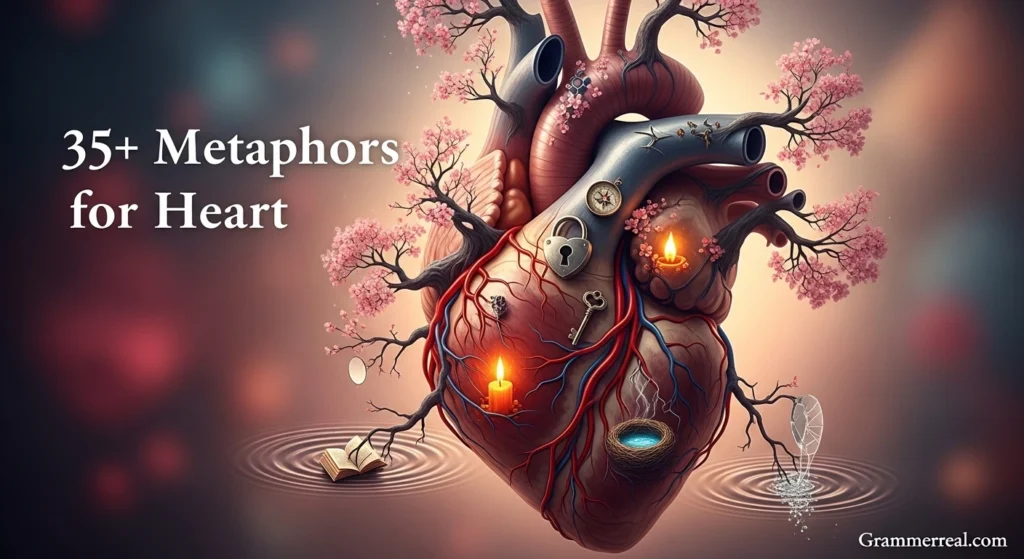
Language often uses metaphors to explain the heart. Simple images help readers understand emotions in an easy way. A heart can act like a home, a fire, a garden, or even a compass. Each comparison shows a different side of human feelings.
The sections below explore many metaphors for the heart. Easy wording keeps the ideas clear. Each metaphor shows how emotions shape human life.
A Heart Like a Warm Home
A home gives shelter and safety. People rest there after long days.
Meaning: The heart can be a place of comfort.
Example: “Her heart felt like a warm home for everyone around her.”
Friends often search for understanding. Kind people offer emotional shelter. Gentle words and patience make others feel safe. A caring heart creates that safe space.
Warm homes welcome visitors without judgment. Loving hearts do the same.
A Heart Like a Burning Fire
Fire produces heat and energy. Flames move with power and brightness.
Meaning: The heart can hold passion and strong emotion.
Example: “His heart burned like a bright fire for justice.”
Passion pushes people forward. Strong feelings create motivation. Artists, leaders, and dreamers often carry this inner flame.
Energy from the heart inspires action and courage.
A Heart Like a Fragile Glass
Glass looks beautiful but breaks easily.
Meaning: The heart can be sensitive.
Example: “After the argument, her heart felt like fragile glass.”
Hurtful words damage emotions quickly. Broken trust creates deep sadness. Healing takes time and patience.
Careful treatment protects fragile hearts.
A Heart Like a Hidden Treasure Chest
Treasure chests hold valuable things.
Meaning: The heart contains precious feelings.
Example: “His heart was a treasure chest of kindness.”
Kindness, love, loyalty, and empathy are emotional treasures. These qualities enrich relationships.
Treasure becomes meaningful when shared.
A Heart Like a Guiding Compass
A compass helps travelers find direction.
Meaning: The heart can guide decisions.
Example: “Her heart acted like a compass during difficult choices.”
Logic explains many things. Feelings also guide human actions. Compassion often leads to better decisions.
Trusting inner values helps people stay on the right path.
A Heart Like a Deep Ocean
Oceans hold great depth and mystery.
Meaning: The heart contains complex emotions.
Example: “His heart felt like a deep ocean of thoughts.”
Surface waves appear calm or rough. Deeper waters remain unseen. Human emotions work the same way.
Many feelings remain hidden beneath the surface.
A Heart Like a Garden of Feelings
Gardens grow flowers, plants, and sometimes weeds.
Meaning: The heart grows emotions over time.
Example: “Her heart became a garden full of love.”
Positive feelings grow with care and patience. Neglect allows negative emotions to appear.
Kind actions work like water and sunlight for the heart.
A Heart Like a Locked Door
A locked door stops others from entering.
Meaning: The heart can close after pain.
Example: “His heart turned into a locked door after betrayal.”
Fear sometimes builds emotional walls. Protection feels necessary after hurt. Trust returns slowly.
Opening that door again requires courage.
A Heart Like a Bright Lantern
Lanterns bring light to dark places.
Meaning: The heart can spread hope.
Example: “Her heart glowed like a lantern in dark times.”
Encouraging people help others feel stronger. Positive energy spreads through kindness.
Hope often begins with one caring person.
A Heart Like a Heavy Stone
Stones feel hard and weighty.
Meaning: The heart may carry sadness or guilt.
Example: “Regret sat in his heart like a heavy stone.”
Emotional burdens affect thoughts and actions. Apologies and forgiveness remove that weight.
Relief arrives when burdens disappear.
A Heart Like a Beating Drum
Drums create rhythm and movement.
Meaning: The heart represents life and energy.
Example: “Excitement made her heart beat like a drum.”
Strong emotions change the heartbeat. Joy, fear, and anticipation increase that rhythm.
Life itself moves with the rhythm of the heart.
A Heart Like an Open Window
Windows allow fresh air to enter.
Meaning: The heart can remain open and welcoming.
Example: “His heart stayed like an open window for new friendships.”
Open-minded people welcome different ideas. Honest communication flows easily.
Fresh emotional air keeps relationships healthy.
A Heart Like a Bridge Between People
Bridges connect two sides of a river.
Meaning: The heart helps people understand each other.
Example: “Empathy built a bridge between their hearts.”
Connection reduces loneliness. Understanding builds strong bonds.
Emotional bridges strengthen communities.
A Heart Like a Quiet Library
Libraries hold stories and knowledge.
Meaning: The heart stores memories and lessons.
Example: “Her heart felt like a quiet library of memories.”
Experiences teach valuable lessons. Happy and sad moments become emotional knowledge.
Reflection turns memories into wisdom.
A Heart Like a Small Candle
A candle gives light even in darkness.
Meaning: The heart carries hope during difficult moments.
Example: “Hope flickered in his heart like a candle.”
Small light still pushes back darkness. A little hope keeps people moving forward.
Strength often begins with a tiny spark.
Why Heart Metaphors Matter
Metaphors make emotions easier to understand. Simple comparisons help readers imagine feelings clearly. Hearts represent love, courage, sadness, and kindness.
Language becomes powerful when emotions connect with images.
Writers use heart metaphors in poetry, stories, and speeches. These images help readers feel the message rather than just read it.
Conclusion
Metaphors for the heart reveal many sides of human emotion. The heart can resemble a warm home, a burning fire, a fragile glass, a guiding compass, or a garden of feelings. Each metaphor shows a different emotional truth.
Love grows there. Pain also appears there. Hope often begins there.
Understanding the heart helps people understand each other.
FAQs
Why do writers use heart metaphors?
Heart metaphors explain emotions in a clear and creative way.
What does a “warm heart” mean?
It describes a kind and caring person.
Can the heart represent courage?
Yes. Many cultures connect bravery with the heart.
Why is the heart compared to a garden?
Because emotions grow and change like plants.
What does a “heavy heart” symbolize?
It usually represents sadness, regret, or emotional pain.