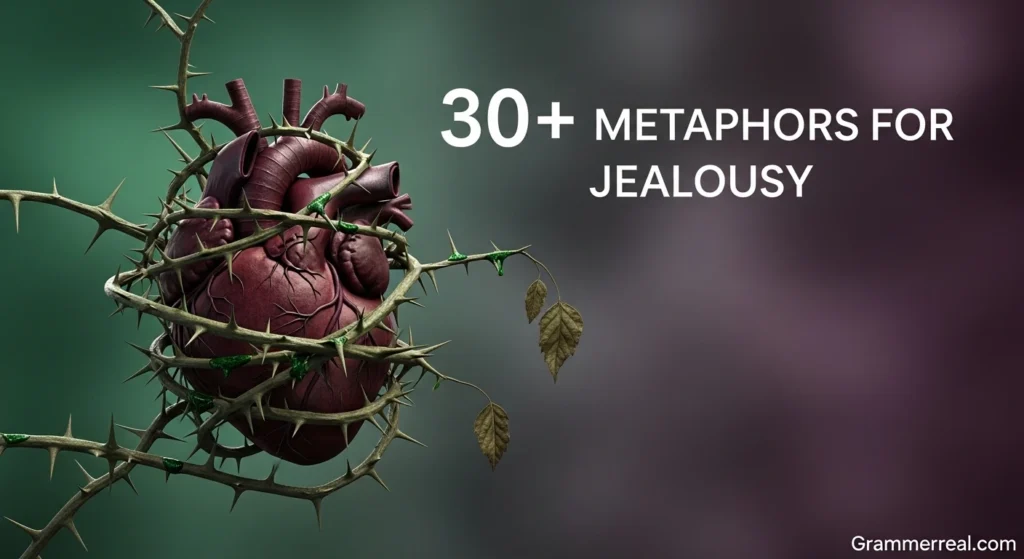
Jealousy is a strong feeling. Someone else has something you want. Another person receives attention you wish was yours.
That feeling can grow quietly. It can sit inside the heart for a long time. At first it may look small, yet it slowly becomes heavier. People from every age feel jealousy. Children feel it. Adults feel it too.
Writers often use metaphors to explain jealousy because emotions are hard to describe with simple definitions. A metaphor turns the feeling into an image. When jealousy becomes a picture, readers understand it better.
Below are different metaphors for jealousy. Each one shows the feeling from a different angle. Simple words are used so the meaning stays clear.
A Small Green Monster Inside the Heart
Picture a tiny monster hiding inside someone’s chest. It wakes up when another person succeeds.
Meaning: Jealousy can behave like a creature that grows when attention goes elsewhere.
For example: “A green monster woke inside him when his friend won the prize.”
That creature does not always appear immediately. A quiet moment can bring it out. Success from others may feed it. Over time the monster becomes louder.
Control over emotions is important. When jealousy grows too large, it starts to damage friendships.
A Bitter Taste on the Tongue
Imagine tasting something very bitter. The flavor spreads and ruins the meal.
Meaning: Jealousy can spoil happy moments.
For example: “Her joy turned bitter when jealousy filled her mind.”
Bitter taste is difficult to ignore. A similar feeling happens with jealousy. Happiness fades even during good events.
Appreciating personal achievements helps remove that bitterness.
Smoke Filling a Clear Room
Visualize a clean room with fresh air. Suddenly smoke begins to spread.
Meaning: Jealousy can cloud clear thinking.
For example: “Jealous thoughts filled his mind like smoke.”
Smoke hides everything. Vision becomes weak. In the same way jealousy hides logic and calm thinking.
Once the smoke clears, people often realize the emotion was unnecessary.
A Thorn Hidden in a Rose
Roses look beautiful. Sharp thorns hide beneath the petals.
Meaning: Jealousy can hide inside love or admiration.
For example: “A thorn of jealousy grew in her heart.”
Someone may love a friend deeply. Success from that friend may still cause discomfort. This mixture of admiration and envy creates emotional conflict.
Understanding the feeling can help remove the thorn.
A Fire That Burns Quietly
Fire does not always roar loudly. Small flames can burn for a long time.
Meaning: Jealousy can slowly damage emotions.
For example: “Jealousy burned quietly inside him.”
Quiet fires still destroy things around them. Similar damage happens with hidden jealousy. Relationships weaken if the feeling stays ignored.
Talking honestly often cools the flame.
A Dark Cloud Over a Bright Day
Bright sunshine fills the sky. A dark cloud suddenly moves across it.
Meaning: Jealousy can cover happiness.
For example: “Her success brought a cloud of jealousy to the room.”
Clouds change the mood of the sky quickly. A joyful moment can lose its brightness in the same way.
Recognizing other people’s success as inspiration can clear the sky again.
A Heavy Stone in the Pocket
Think about walking while carrying a heavy rock.
Meaning: Jealousy creates emotional weight.
For example: “He carried jealousy like a stone in his pocket.”
That stone slows movement. Energy disappears quickly. Emotional weight works the same way.
Letting go of comparisons removes the burden.
A Poison Dropped Into Sweet Water
Sweet water tastes refreshing. Poison ruins the entire drink.
Meaning: Jealousy can destroy happiness.
For example: “A drop of jealousy poisoned the celebration.”
One negative thought can damage a peaceful moment. Happiness fades when jealousy enters the mind.
Healthy confidence protects joy from that poison.
A Shadow Following Every Step
Shadows appear whenever light shines.
Meaning: Jealousy often follows admiration.
For example: “His admiration carried a shadow of jealousy.”
Shadows remain close but they are not the real person. In the same way jealousy is only a reflection of insecurity.
Confidence weakens the shadow.
A Slow Rust on Metal
Metal looks strong and bright. Rust slowly eats away at its surface.
Meaning: Jealousy can slowly weaken relationships.
For example: “Jealousy rusted their friendship over time.”
Damage from rust happens little by little. People may not notice it immediately. Emotional distance grows quietly.
Trust and honesty can clean the rust away.
A Storm Growing on the Horizon
Storms begin as small clouds far away.
Meaning: Jealousy can grow into anger.
For example: “A storm of jealousy rose inside him.”
Storms bring strong winds and loud thunder. Emotional storms bring arguments and conflict.
Calm communication helps prevent the storm.
A Snake Hiding in the Grass
Grass may look safe and peaceful. A hidden snake creates danger.
Meaning: Jealousy can stay hidden until the right moment.
For example: “Jealousy moved like a snake through his thoughts.”
Hidden feelings often surprise people. Jealousy may stay quiet for a long time. Sudden reactions appear when the emotion becomes too strong.
Self-awareness reduces this hidden danger.
A Mirror Showing Insecurity
Mirrors reveal what stands in front of them.
Meaning: Jealousy reflects personal fears.
For example: “Her jealousy acted like a mirror of insecurity.”
Comparison creates doubt. Someone else’s success may highlight personal struggles.
Growth becomes easier when focus shifts toward personal progress instead of comparison.
A Tight Knot in the Stomach
Anxious feelings often create tension in the body.
Meaning: Jealousy causes discomfort and stress.
For example: “A knot of jealousy twisted in his stomach.”
Tight knots are difficult to ignore. Emotional stress can feel similar.
Relaxation and honest thinking can loosen the knot.
A Fence Between Two Friends
Fences divide open spaces.
Meaning: Jealousy creates distance in relationships.
For example: “Jealousy built a fence between them.”
Distance grows when comparison replaces trust. Conversations become colder.
Removing jealousy brings people closer again.
Why Writers Use Metaphors for Jealousy
Feelings are invisible. People cannot touch or see emotions directly. Metaphors create images that explain those feelings clearly.
A monster shows jealousy as something alive. Fire shows how it burns slowly. Rust explains how relationships weaken over time.
These pictures make the emotion easier to understand.
Conclusion
Jealousy is a natural emotion. Everyone feels it sometimes. Problems begin when the feeling grows too strong.
Metaphors help explain jealousy in simple ways. It may look like smoke, fire, rust, a shadow, or a storm. Each image reveals how jealousy behaves inside the heart.
Understanding the emotion is the first step toward controlling it. Confidence, gratitude, and honesty help remove jealousy from relationships.
FAQs
Why is jealousy often called a green monster?
The image shows jealousy as a creature that grows when envy appears.
Can jealousy damage friendships?
Yes. Hidden jealousy may slowly weaken trust and communication.
Is jealousy always harmful?
Small amounts can show what someone truly desires, but strong jealousy often causes problems.
Why do writers use metaphors for jealousy?
Metaphors turn complex emotions into simple images.
How can someone reduce jealousy?
Focusing on personal growth and appreciating others’ success can help control the feeling.



