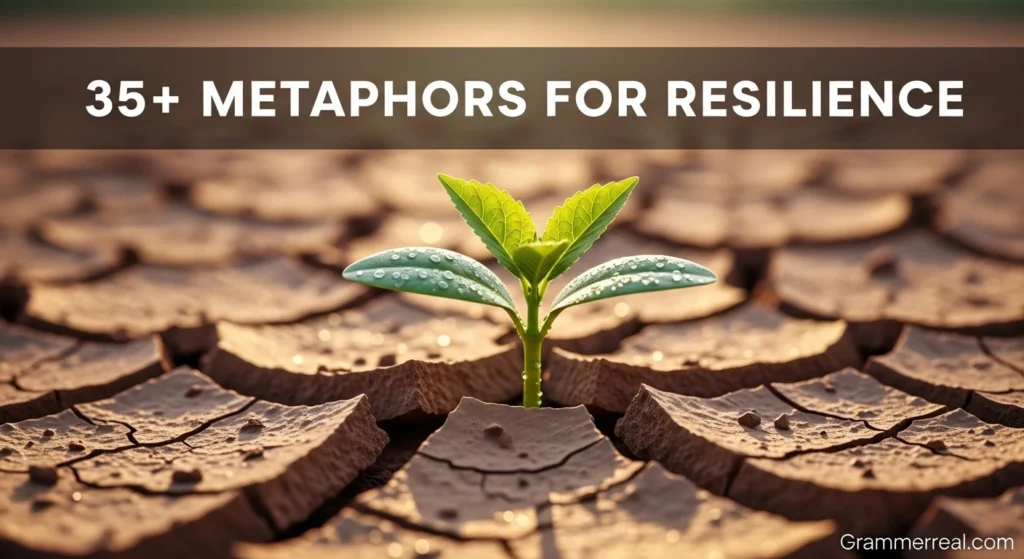
Resilience does not beg for sympathy. It does not collapse at the first sign of pressure. It does not disappear when storms arrive. Instead, it bends, absorbs, and rises again. Where others see damage, resilience sees adaptation. Where fear expects an ending, resilience begins rebuilding.
Because the word resilience can describe emotional strength, recovery, endurance, leadership, or survival, writers rely on metaphors to give it shape. Resilience is not always visible. It works quietly beneath the surface. Through imagery, it becomes something we can picture and feel. The comparisons below explore different dimensions of resilience with depth, clarity, and expanded meaning.
Resilience as Bamboo in a Storm
Bamboo does not fight the wind. It bends with it.
Meaning: Resilience represents flexibility under pressure.
For example: “She moved through hardship like bamboo in a storm.”
Rigid structures often break. Flexible ones survive. Strength does not always mean resistance. Sometimes survival depends on adaptation. As a result, bamboo has become one of the strongest symbols of resilience.
Bending does not signal weakness. It signals wisdom.
Resilience as a Phoenix Rising from Ashes
The phoenix falls into fire and returns renewed.
Meaning: Resilience symbolizes rebirth after destruction.
For instance: “After failure, he rose like a phoenix from the ashes.”
Loss does not have to mean final defeat. Recovery can lead to transformation. Fire may burn away comfort, but it can also refine identity. Therefore, this metaphor expresses renewal after collapse.
Endings sometimes prepare the ground for stronger beginnings.
Resilience as Roots Cracking Concrete
Tiny roots push through solid pavement over time.
Meaning: Resilience reflects persistent growth despite obstacles.
Example: “Her ambition grew like roots through concrete.”
Barriers look permanent until something patient challenges them. Progress does not require speed. It requires steady effort. Even the hardest surfaces cannot resist continuous pressure forever.
Persistence reshapes environments.
Resilience as a Lighthouse in Rough Seas
Waves crash violently around it. The light continues to shine.
Meaning: Resilience represents guidance and steadiness during chaos.
For example: “He became the lighthouse when everything felt dark.”
Uncertainty surrounds everyone at times. Calm presence becomes a source of hope. Stability inspires others to move forward. In this way, resilience does more than protect the self — it protects others.
Consistency builds trust.
Resilience as a Scar That Tells a Story
Scars mark where wounds once existed.
Meaning: Resilience symbolizes healed pain.
For instance: “Her confidence was a scar she wore proudly.”
Healing does not erase difficulty. It proves survival. Scars remind us that suffering can lead to growth. Rather than hiding damage, resilience integrates it into identity.
Strength often carries history.
Resilience as a River Carving a Canyon
Water seems gentle. Over time, it shapes stone.
Meaning: Resilience reflects steady persistence.
Example: “His effort carved success like a river shaping rock.”
Immediate results rarely define resilience. Long-term dedication creates change. Quiet effort accumulates power. Therefore, the river metaphor highlights patience and endurance.
Time strengthens determination.
Resilience as Steel Tempered by Fire
Steel becomes stronger after exposure to heat.
Meaning: Resilience grows through hardship.
For example: “The pressure tempered her like steel in fire.”
Comfort rarely builds durability. Challenges refine character. Heat tests limits and strengthens structure. Instead of breaking under pressure, resilient people become tougher.
Adversity shapes inner strength.
Resilience as Wildflowers After a Wildfire
After destruction, small blooms appear through ash.
Meaning: Resilience symbolizes renewal in devastated spaces.
For instance: “Hope returned like wildflowers after the blaze.”
Recovery often begins quietly. Growth does not wait for perfect conditions. Even damaged soil can nurture life again. This metaphor captures the quiet miracle of return.
Life seeks opportunity.
Resilience as an Anchor in Deep Water
An anchor holds steady beneath turbulent waves.
Meaning: Resilience provides inner stability.
Example: “Her values were an anchor during uncertainty.”
External chaos does not always determine internal peace. Anchors remain unseen, yet their impact is powerful. Strong principles prevent drift.
Inner grounding protects against external storms.
Resilience as Dawn After the Longest Night
Darkness stretches endlessly. Eventually, light appears.
Meaning: Resilience represents hope that survives hardship.
For example: “Their perseverance felt like dawn after endless night.”
Despair often feels permanent. Light proves otherwise. Survival carries promise. When morning arrives, it confirms endurance.
Hope renews strength.
Why Writers Use Metaphors for Resilience
Resilience feels abstract on its own. It cannot be held or measured easily. Metaphors transform it into something visible — bamboo bending, steel strengthening, rivers carving stone.
Each image emphasizes a different aspect. Flexibility highlights adaptation. Fire suggests transformation. Anchors represent stability. By choosing the right comparison, writers control emotional tone.
Imagery allows readers to connect with resilience in personal ways.
The Quiet Power of Resilience
Resilience rarely looks dramatic. It often appears as patience. It sounds like controlled breathing during stress.
Strength that rebuilds carries deeper impact than strength that dominates. Those who recover repeatedly develop confidence that no failure can erase. Therefore, resilience becomes less about surviving once and more about rising repeatedly.
Growth continues because resilience refuses to end the story.
How to Use Resilience Metaphors Effectively
Select one central image and expand its meaning gradually. Do not overload your sentence with multiple comparisons.
Weak example: “She was bamboo, steel, a river, and a lighthouse all together.”
Stronger example: “She stood like a lighthouse in the middle of chaos.”
Clear imagery strengthens clarity. Vary sentence rhythm. Blend reflection with description.
A Moment to Reflect
When you think of resilience, what image appears first?
Do you see bamboo bending? Do you imagine fire shaping steel?
Your answer reveals how you define endurance.
Conclusion
Metaphors for resilience reveal the layered nature of endurance. Resilience can resemble bamboo in a storm, a phoenix rising, roots cracking concrete, or dawn after darkness. Each comparison uncovers a unique form of recovery.
Although hardship may feel overwhelming, resilience transforms difficulty into development. Through thoughtful metaphor, writers show that resilience is not about avoiding storms. It is about standing, bending, healing, and rising again — stronger each time.
FAQs
What does resilience symbolize in literature?
Resilience often symbolizes recovery, persistence, growth through adversity, and inner strength.
Why are nature metaphors effective for resilience?
Nature constantly adapts to pressure and change. These natural processes reflect human endurance clearly and powerfully.
Can resilience develop over time?
Yes. Like steel tempered by fire, resilience strengthens through repeated challenges and experience.
Is resilience the same as stubbornness?
No. Resilience involves flexibility and adaptation, while stubbornness often resists change.
How can I create my own resilience metaphor?
Think about something that survives pressure or grows after damage. Connect that image directly to the message you want to express.



