The air smells like rain on warm dust. Laughter echoes across a sunlit field. Shoes lie abandoned near the edge of a river where someone dared to run barefoot, heart racing, eyes wide open to everything. This is youth—not just an age, but a feeling that hums under the skin like music you can’t quite turn off.
Youth is more than a number. It is a season, a rhythm, a language of beginnings. And metaphors help us understand it better. They turn something abstract into something we can see, feel, and even taste. When you describe youth as a “rising sun” or a “wild river,” you bring its energy to life. You give it shape. You make it unforgettable.
Understanding metaphors for youth matters because they deepen how we write, speak, and think. They add color to stories, power to emotions, and clarity to ideas. Whether you’re crafting poetry, telling stories, posting on social media, or simply reflecting on life, these metaphors become tools—bright, flexible, and deeply human.
What Youth Represents Beyond Age
Youth is usually connected to being young in years. However, emotionally and symbolically, it can represent:
Energy Fresh beginnings Growth Discovery Rebellion Innocence Dreams Risk-taking
Moreover, youth often becomes a symbol of potential. It reflects a time when the future feels wide open. At the same time, it can represent inexperience and learning. Because youth carries both strength and uncertainty, metaphors allow us to express both sides clearly.
Why Metaphors Capture Youth So Well
Saying “Youth is exciting” feels simple. However, saying “Youth is sunrise breaking over the horizon” creates a stronger image. The second sentence shows light, warmth, and a new beginning.
In this way, metaphors turn abstract ideas into pictures. Instead of listing qualities like energy or hope, a single image can hold them together. Therefore, metaphors make youth easier to understand and remember.
Youth as Sunrise
Sunrise marks the beginning of a new day.
Meaning: Youth represents fresh starts and new possibilities.
Example idea: “Her youth felt like sunrise, full of light and promise.”
Alternative expressions: Dawn of life Morning light First rays of hope
This metaphor highlights optimism and renewal.
Youth as Springtime
Spring is a season of growth and blooming.
Meaning: Youth can feel like a time when everything is growing and changing.
Example idea: “His youth was like spring, full of blossoms and new beginnings.”
Alternative expressions: Season of growth Blooming years Fresh blossoms
Spring also reminds us that growth takes time and care.
Youth as a Wild River
Rivers move quickly and sometimes unpredictably.
Meaning: Youth often carries strong energy and emotion.
Example idea: “Her youth rushed forward like a wild river.”
Alternative expressions: Flowing fast Racing current Untamed stream
This metaphor shows both excitement and risk.
Youth as an Open Road
An open road suggests freedom and adventure.
Meaning: Youth can feel like having endless directions to explore.
Example idea: “His youth stretched before him like an open road.”
Alternative expressions: Wide highway Path without limits Journey just beginning
This image reflects independence and possibility.
Youth as a Bright Flame
A flame burns brightly and energetically.
Meaning: Youth represents passion, drive, and intensity.
Example idea: “Her youth burned like a bright flame, bold and fearless.”
Alternative expressions: Spark of life Fire of ambition Blazing spirit
However, a flame can also flicker, showing vulnerability.
Youth as a Blank Canvas
A blank canvas invites creativity.
Meaning: Youth can feel like a time when life has not yet been fully painted.
Example idea: “His youth was a blank canvas waiting for color.”
Alternative expressions: Unwritten story Empty page Fresh start
This metaphor emphasizes potential and creativity.
Youth as a Bud About to Bloom
A flower bud holds promise.
Meaning: Youth suggests growth that has not yet fully opened.
Example idea: “She stood like a bud about to bloom.”
Alternative expressions: Flower in waiting Petals preparing to open Promise unfolding
This image highlights transformation.
Youth as the First Chapter of a Book
Every story begins somewhere.
Meaning: Youth represents the early pages of life’s journey.
Example idea: “Youth is the first chapter of a long story.”
Alternative expressions: Opening pages Beginning of the tale Start of the journey
This metaphor shows that more experiences are yet to come.
When Youth Feels Joyful
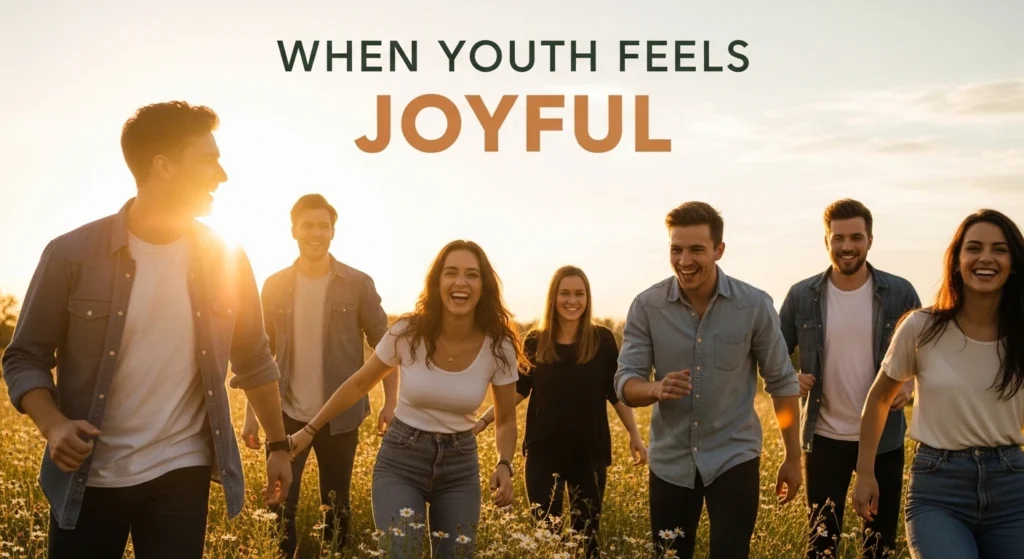
For many people, youth feels like:
Laughing in sunlight Running without fear Dreaming without limits
For example, “Those years felt like dancing in the morning light.” These images capture freedom and happiness.
When Youth Feels Confusing
At the same time, youth can also feel like:
Walking through fog Balancing on a narrow path Learning through mistakes
For instance, “Youth felt like wandering through mist, unsure but curious.” This shows that uncertainty is part of growth.
How Writers Use Youth Metaphors
Writers often compare youth to nature—sunrise, spring, rivers, flames—because these images naturally suggest beginnings and energy. Moreover, such metaphors feel universal. Almost everyone understands what dawn or spring looks like. As a result, these images connect easily with readers.
A Simple Reflection Exercise
Complete the sentence:
“Youth feels like ______.”
Possible answers:
Sunrise on a new day Spring flowers blooming A wild river flowing fast An open road ahead
Each answer will reflect a different memory or feeling.
Using Youth Metaphors in Daily Life
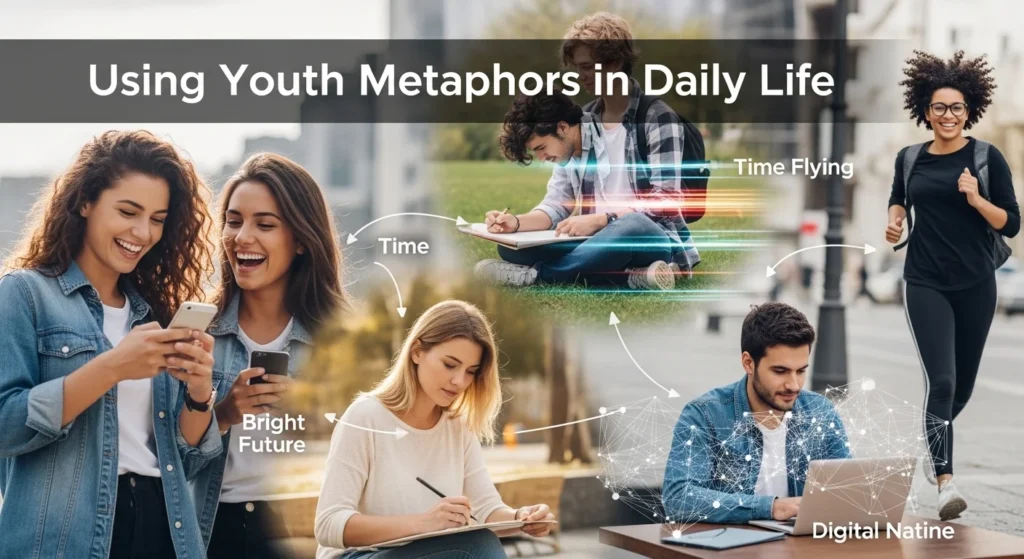
Metaphors for youth work well in:
Speeches Graduation messages Poetry Personal essays Motivational writing
Instead of saying, “They are young and hopeful,” you could say, “They are sunrise on the horizon.” Such language feels more vivid and emotional.
Conclusion
Metaphors for youth offer more than creative expression—they provide a deeper way to understand one of life’s most intense and beautiful stages. Through images of fire, rivers, sunlight, and sky, we begin to see youth not just as an age, but as an experience filled with motion, emotion, and meaning.
As you write, speak, or reflect, let these metaphors guide you. Use them to color your words, sharpen your ideas, and connect with others. Whether you are telling a story, sharing a caption, or journaling your thoughts, these comparisons will help you bring youth to life in powerful ways.
FAQs
Why are metaphors for youth useful?
They help describe energy, hope, and growth in a vivid way.
What is the most common metaphor for youth?
Sunrise and spring are common because they represent beginnings.
Can youth metaphors show challenges?
Yes. Fog or wild rivers can represent confusion or risk.
Why compare youth to nature?
Nature naturally reflects growth and change, which match the idea of youth.
How can I create my own youth metaphor?
Think about how youth feels—exciting, uncertain, hopeful—and compare it to something simple like light, seasons, or journeys.



