The room feels dim at first. Words float in the air like dust particles, soft yet unclear. You hear them, but they don’t settle. Then suddenly—something clicks. A sentence turns into a picture. A concept becomes a shape. It feels like sunlight slipping through a crack in the curtains, touching everything at once. You don’t just hear anymore—you see. You don’t just read—you feel. That moment, quiet yet powerful, is what we call understanding.
And often, it arrives carried on the wings of a metaphor.
Understanding rarely grows in straight lines. Instead, it unfolds like a story, layered and alive. That’s where metaphors step in—they bridge the gap between what we know and what we are trying to learn. They transform the abstract into something we can touch, taste, and imagine.
Understanding as Light
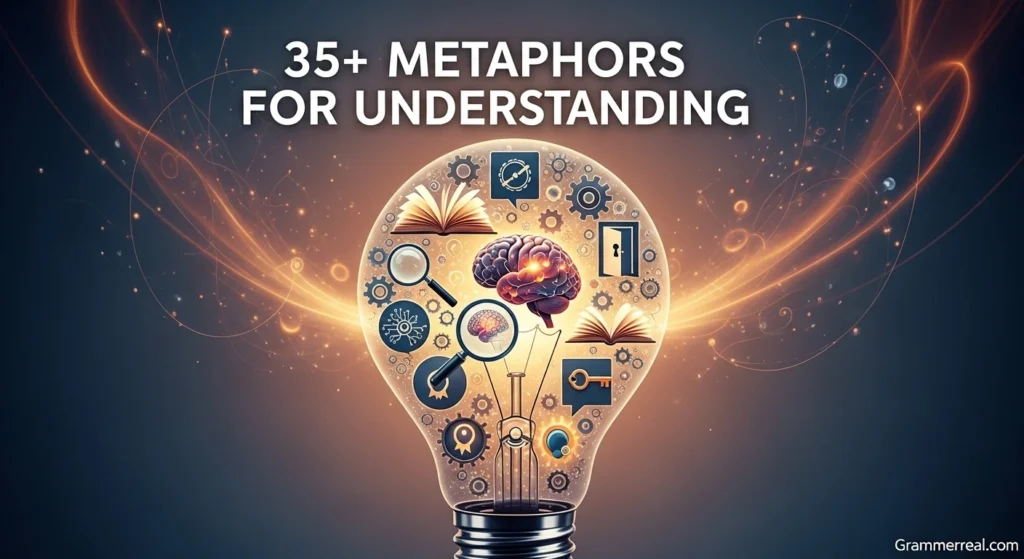
Light is one of the most common metaphors for understanding.
Meaning: Understanding removes darkness and confusion.
Example: “Her explanation was a light in the darkness.”
When you understand, it feels like something brightening inside your thoughts. A problem that once felt impossible becomes visible and manageable.
Other expressions:
- A lightbulb moment
- Illumination of truth
- A spark of insight
Light metaphors emphasize clarity and revelation.
Understanding as Opening a Door

A door suggests access and movement.
Meaning: Understanding gives entry to new ideas.
Example: “Reading that book opened a door in my mind.”
Before understanding, you may feel locked out. After understanding, you step into a new space of awareness.
Alternative phrases:
- Unlocking insight
- Entering new awareness
- Crossing a threshold of knowledge
This metaphor highlights discovery.
Understanding as Building a Bridge
Bridges connect two separate places.
Meaning: Understanding connects people, cultures, or ideas.
Example: “Listening carefully built a bridge between them.”
Misunderstanding often creates distance. Understanding creates connection.
Other variations:
- Bridging the gap
- Connecting worlds
- Crossing to the other side
This metaphor works beautifully in relationships and communication.
Understanding as a Puzzle Piece Clicking Into Place

Puzzles represent complexity.
Meaning: Understanding happens when scattered pieces form a complete picture.
Example: “Suddenly, everything clicked into place.”
Before understanding, things feel scattered. Afterward, they feel organized and meaningful.
Alternative expressions:
- Completing the picture
- Fitting the missing piece
- Solving the mystery
This metaphor emphasizes coherence.
Understanding as a Window
A window allows you to see beyond walls.
Meaning: Understanding expands perspective.
Example: “Travel became a window into another culture.”
A window metaphor suggests that understanding widens your view rather than replacing it.
Other expressions:
- A clear view
- Seeing through new glass
- Opening your eyes
This metaphor focuses on perspective.
Understanding as Water Clearing Mud
Water often symbolizes clarity and flow.
Meaning: Understanding settles confusion and brings calm.
Example: “After talking it through, the muddy thoughts cleared.”
Like murky water becoming transparent, understanding allows you to see clearly again.
Alternative ideas:
- Clear stream of thought
- Calm after confusion
- Flow of clarity
This metaphor feels soothing and gradual.
Understanding as Climbing to a Higher View

Height often symbolizes broader vision.
Meaning: Understanding allows you to see the bigger picture.
Example: “Once she stepped back, she saw the situation from a higher ground.”
From above, details align into patterns. Understanding provides that wider viewpoint.
Other variations:
- Reaching a new perspective
- Standing on higher ground
- Seeing the landscape clearly
This metaphor emphasizes insight.
Understanding as Music Falling Into Harmony
Music requires alignment and rhythm.
Meaning: Understanding happens when ideas finally feel balanced.
Example: “Their conversation shifted from noise to harmony.”
Before understanding, words clash. After understanding, they align smoothly.
Alternative expressions:
- Harmonizing thoughts
- Finding the rhythm
- A chord that finally makes sense
This metaphor shows emotional connection.
Understanding as Roots Growing Deep
Roots suggest stability and depth.
Meaning: True understanding is not shallow—it grows stronger over time.
Example: “His understanding of history grew roots over the years.”
Surface knowledge may be quick, but deep understanding takes time.
Other ideas:
- Deeply rooted insight
- Grounded awareness
- Foundation of knowledge
This metaphor shows maturity.
Understanding as a Map

Maps guide you through unknown spaces.
Meaning: Understanding provides direction.
Example: “Her advice became a map through the confusion.”
Without understanding, you may feel lost. With it, you can navigate confidently.
Alternative phrases:
- Charting the path
- Finding direction
- Navigating truth
This metaphor highlights guidance.
When Understanding Feels Instant
Sometimes understanding comes quickly:
- A flash of lightning
- A switch turning on
- A key turning in a lock
Example: “It was like lightning—suddenly, he understood everything.”
These metaphors capture sudden realization.
When Understanding Grows Slowly
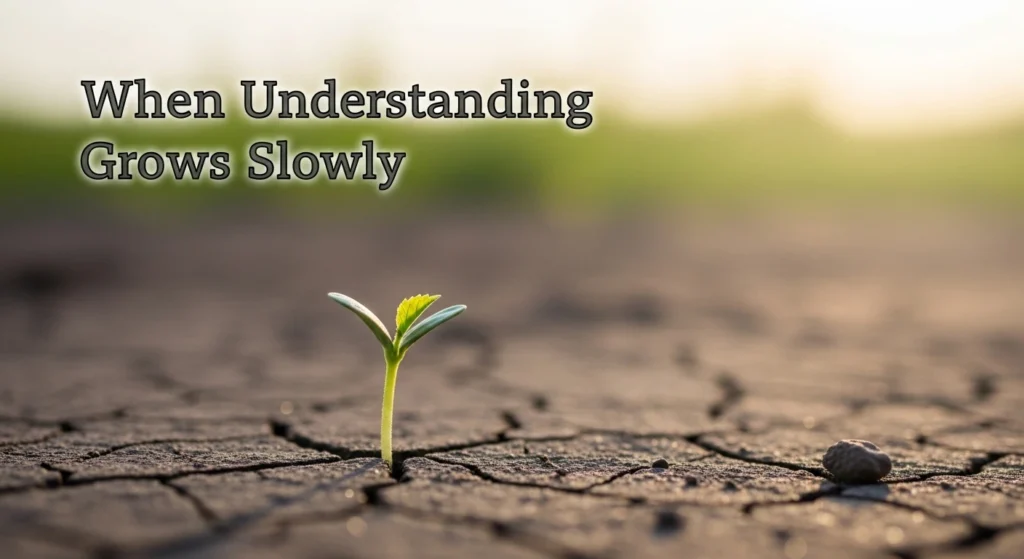
Other times, it builds gradually:
- Sunrise spreading light
- Ice melting
- Seeds slowly growing
Example: “Understanding dawned on her slowly, like morning light.”
These metaphors show patience and growth.
Using Metaphors for Understanding in Writing
Metaphors make explanations richer and more engaging.
Instead of saying: “I finally understood.”
You might say: “A light switched on in my mind.”
Instead of: “We began to understand each other.”
You could write: “We built a bridge across our silence.”
Such expressions feel more alive.
Choosing the Right Metaphor
Different metaphors suit different situations:
- Light for clarity
- Bridge for connection
- Puzzle for complexity
- Map for direction
- Window for perspective
Think about what kind of understanding you want to describe—sudden, gradual, emotional, or intellectual.
Conclusion
Understanding does not arrive all at once. It unfolds gently, like dawn spreading across the sky. At first, everything feels uncertain. Shadows stretch long. Shapes remain unclear. Yet slowly, light grows stronger, revealing details, colors, and meaning. Metaphors act as that first light. They guide your mind, soften confusion, and turn abstract thoughts into living images.
Moreover, metaphors do more than explain—they connect. They link knowledge with emotion, logic with imagination, and people with ideas. When you use them, you don’t just communicate—you invite others into a shared experience. Whether you are writing, speaking, or learning, metaphors become your companions. They help you see clearly, feel deeply, and remember longer.
So, the next time you struggle to understand something, don’t force clarity. Instead, ask yourself: What does this feel like? What does it resemble? In that moment, you may discover a metaphor waiting quietly—ready to unlock meaning, like a key turning gently in your mind.
FAQs
Why are metaphors for understanding important?
They make abstract mental experiences feel concrete and relatable.
What is the most common metaphor for understanding?
Light is very common because it symbolizes clarity and awareness.
Can understanding be described as gradual?
Yes. Metaphors like sunrise or growing roots show slow development.
How can I create my own metaphor for understanding?
Think about how understanding feels—bright, calming, connecting, revealing—and compare it to something physical that creates the same feeling.