The wind pauses, just for a breath, as if the world forgets how to move. Leaves hang still, yet something hums beneath the silence. Then, without warning, a sudden gust rushes through, bending branches, lifting dust, and stirring the quiet into chaos. You feel it on your skin—the sharp shift, the unexpected turn. That moment, when calm breaks into motion, captures the essence of unpredictability.
Life often feels like that restless wind. It refuses to follow a straight path. It twists, surprises, and reshapes our expectations. And that is exactly why learning metaphors for the unpredictable matters. They help us describe what cannot be pinned down. They give language to chaos, and through language, we gain a strange kind of control.
What Unpredictable Really Means Beyond Surprise
Unpredictable means something cannot be easily anticipated or controlled. It does not follow a clear pattern. It can change suddenly, without warning.
Unpredictability can represent:
- Uncertainty
- Instability
- Excitement
- Risk
- Freedom from routine
Metaphors help show which side of unpredictability we mean: thrilling or frightening.
Why Metaphors Capture Unpredictability So Well
Plain language often falls short. Saying “Life is unpredictable” is true, but it feels flat.
Metaphors add texture:
- Life becomes a stormy sea
- A person becomes a spinning coin
- The future becomes fog
These images help readers feel the experience, not just understand it.
Unpredictable as the Weather Changing Without Warning
Weather is one of the most natural metaphors for unpredictability.
Meaning: Something unpredictable shifts suddenly, like skies turning from sunshine to thunder.
Example idea: “His moods were like weather, changing without warning.”
Alternative expressions:
- Stormy temperament
- Skies that never settle
- Sunshine and thunder in the same hour
Sensory detail: You can almost feel the wind turning cold.
Unpredictable as a Wild Horse
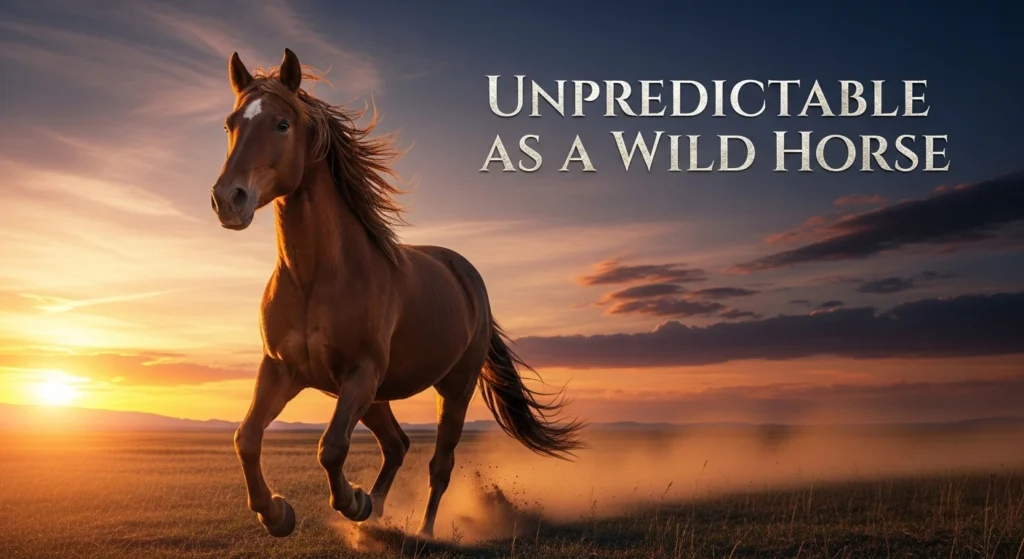
Wild horses symbolize untamed energy.
Meaning: The unpredictable cannot be easily controlled or guided.
Example idea: “Her life was a wild horse, impossible to rein in.”
Alternative expressions:
- Untamed spirit
- Running free
- Unbridled chaos
Mini storytelling: Like trying to ride a horse that refuses the path, unpredictability pulls you into surprise.
Unpredictable as Rolling Dice
Dice metaphors show chance and randomness.
Meaning: Outcomes feel like luck rather than certainty.
Example idea: “Every decision with him felt like rolling dice.”
Alternative expressions:
- Gamble of fate
- Coin toss future
- Game of chance
This metaphor fits risk and uncertainty.
Unpredictable as a Restless Ocean
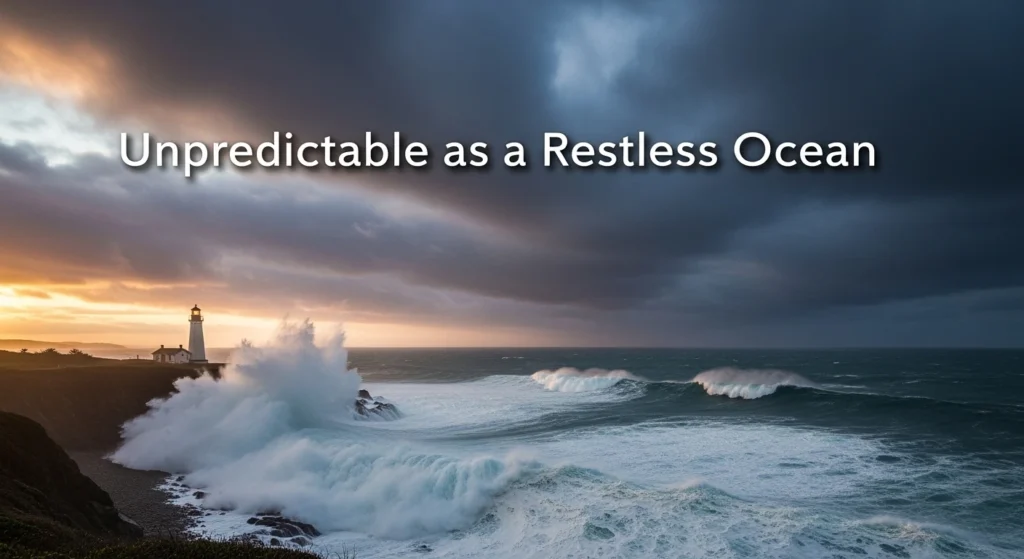
The ocean is beautiful but unstable.
Meaning: Unpredictability moves in waves—calm one moment, violent the next.
Example idea: “The market was a restless ocean, impossible to predict.”
Alternative expressions:
- Sea of uncertainty
- Waves of change
- Tides that shift suddenly
Sensory detail: You hear crashing water and feel the pull of currents.
Unpredictable as a Flickering Flame
A flame dances unpredictably.
Meaning: Something unpredictable is lively but unstable.
Example idea: “Her attention was a flickering flame, never steady for long.”
Alternative expressions:
- Spark that jumps
- Fire that won’t settle
- Dancing light
This metaphor feels delicate yet unstable.
Unpredictable as Shifting Sand
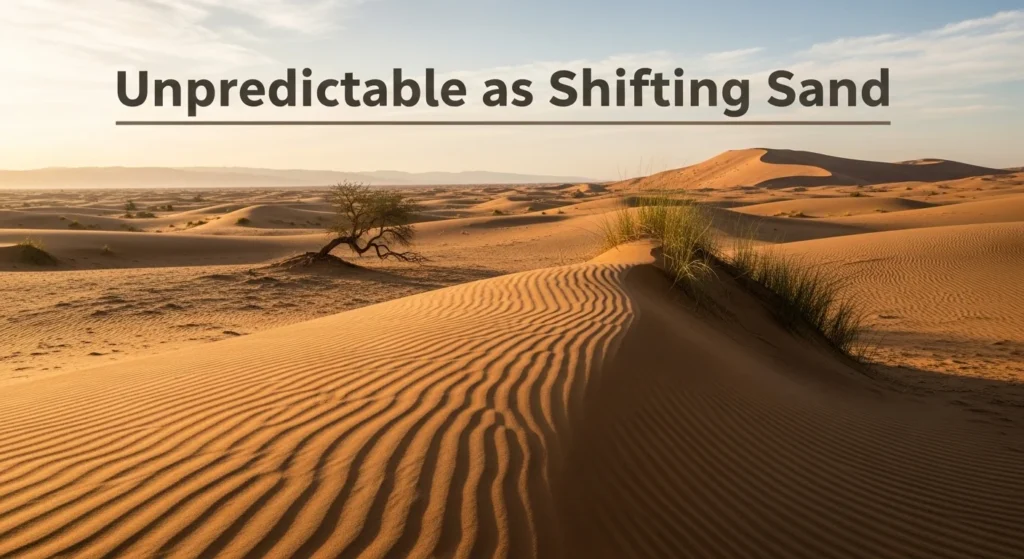
Sand moves beneath your feet.
Meaning: Unpredictability makes it hard to find solid ground.
Example idea: “Trusting him was like standing on shifting sand.”
Alternative expressions:
- Unstable ground
- Moving foundation
- Desert of uncertainty
This metaphor emphasizes insecurity.
Unpredictable as a Maze With Changing Walls
A maze metaphor shows confusion.
Meaning: The unpredictable keeps altering the path forward.
Example idea: “Life became a maze with changing walls, no clear exit in sight.”
Alternative expressions:
- Puzzle without solution
- Path that rearranges
- Journey with no map
This metaphor feels disorienting.
Unpredictable as a Cat With Its Own Mind
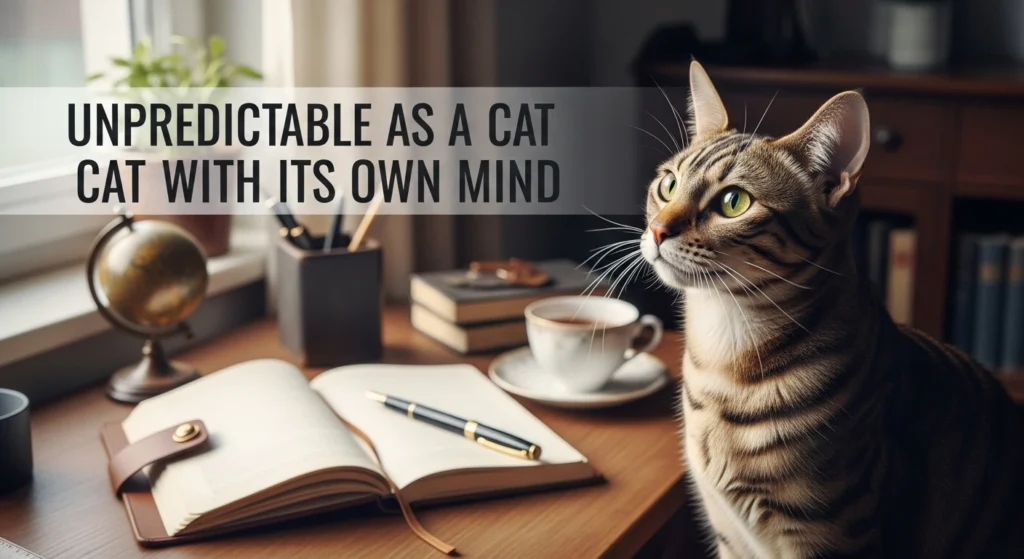
Cats are famously independent.
Meaning: Something unpredictable follows its own rules.
Example idea: “His plans were like a cat—doing whatever they pleased.”
Alternative expressions:
- Independent as a cat
- Untouchable routine
- Refusing control
This metaphor can be playful.
Unpredictable as Fireworks
Fireworks explode unexpectedly.
Meaning: Unpredictability can feel sudden, dramatic, and intense.
Example idea: “The night was unpredictable, bursting like fireworks with surprises.”
Alternative expressions:
- Sparks of chaos
- Sudden explosions of change
- Bright unpredictability
This metaphor is energetic.
When Unpredictability Feels Exciting
Sometimes unpredictability is freedom:
- A road trip with no map
- A story with twists
- A sky full of possibility
Example idea: “Her creativity was unpredictable, like jazz improvisation.”
Alternative expressions:
- Spontaneous music
- Wild inspiration
- Beautiful surprise
This shows unpredictability as positive.
When Unpredictability Feels Frightening
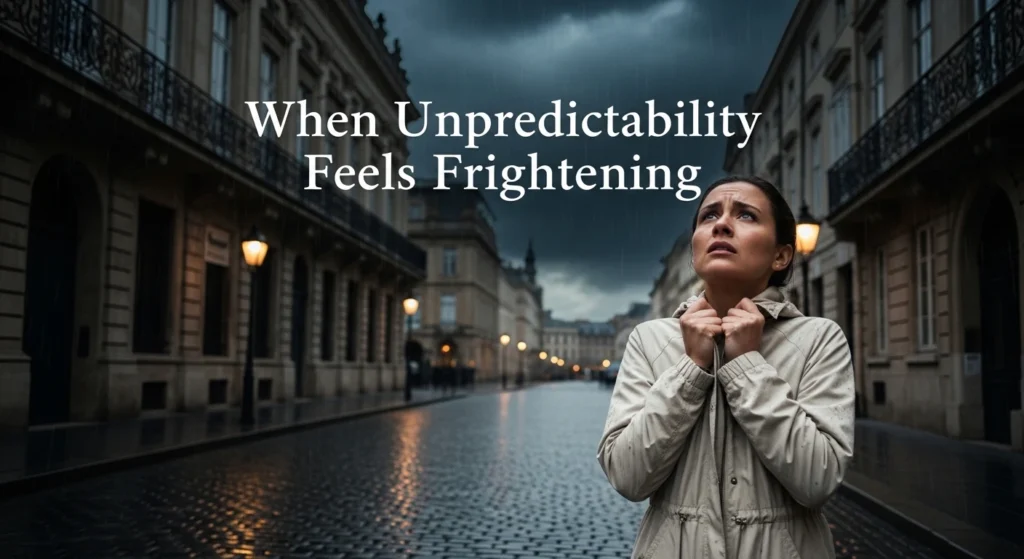
Other times it feels unsafe:
- A storm you cannot escape
- A floor that shifts
- A shadow that moves suddenly
Example idea: “Living with violence is living under an unpredictable storm.”
Metaphors help show emotional weight.
Unpredictability in Stories and Culture
Many famous stories depend on unpredictability: plot twists, sudden revelations, fate turning.
In mythology, trickster figures often symbolize unpredictability—chaos that disrupts order, but also creates change.
Metaphors help us understand unpredictability as both danger and transformation.
A Creative Exercise
Fill in the blank:
“Unpredictable is like ______ because it ______.”
Sample answers:
- Unpredictable is like the weather because it changes suddenly.
- Unpredictable is like rolling dice because outcomes depend on chance.
- Unpredictable is like a restless ocean because it shifts between calm and storm.
- Unpredictable is like shifting sand because nothing feels stable.
Now write one full sentence:
Example: “Life is a restless ocean, calm one moment and stormy the next.”
Using Unpredictable Metaphors in Writing and Daily Life
Metaphors for unpredictable work well in:
- Describing emotions
- Writing fiction and poetry
- Explaining uncertain situations
- Social media captions
Instead of: “My week was chaotic.” Try: “My week was a stormy sea.”
Instead of: “He’s inconsistent.” Try: “He’s like weather that never settles.”
These feel more vivid.
Choosing the Right Metaphor for Your Tone
Some metaphors feel serious (shifting sand, storms). Some feel playful (cats, fireworks) and some feel poetic (flickering flame, restless ocean).
Choose the one that matches your message.
Conclusion
Unpredictability shapes life in ways we cannot control. It disrupts plans, challenges expectations, and forces us to adapt. Yet, through metaphors, we gain a way to understand it. We transform chaos into imagery, confusion into clarity, and uncertainty into something meaningful. Therefore, instead of fearing unpredictability, we can learn to describe it, explore it, and even appreciate it.
In the end, metaphors do more than decorate language. They help us see the world differently. They allow us to feel what words alone cannot express. And when life shifts like the wind before a storm, these metaphors remind us that even the unknown has its own strange rhythm.
FAQs
Why are metaphors for unpredictable useful?
They make uncertainty easier to describe by turning it into vivid images.
What is the most common metaphor for unpredictability?
Weather is very common because it changes suddenly and cannot be controlled.
Can unpredictability be positive?
Yes. It can represent excitement, creativity, and freedom from routine.
Which metaphor shows unpredictability as unstable?
Shifting sand is a strong metaphor for insecurity and lack of solid ground.
How can I create my own unpredictable metaphor?
Think about something in life that changes suddenly—storms, flames, oceans, dice—and compare it to the situation you want to describe.



