The air feels tight, almost electric. Words snap like dry twigs under pressure. Voices rise, clash, and echo like metal striking metal in a dim-lit forge. You can almost hear the sparks—sharp, hot, unpredictable. An argument rarely arrives quietly; instead, it storms in, full of heat, rhythm, and tension. And yet, beneath that noise lies something deeper: a human attempt to be heard, understood, and sometimes, simply to win.
Arguments are not just exchanges of words. They are experiences—emotional, sensory, and deeply personal. That’s why metaphors for arguing matter. They turn conflict into something we can see, feel, and even reshape.
What Arguing Really Means Beyond Words
Arguing is rarely only about facts. Often, arguments carry hidden feelings: frustration, fear, disappointment, pride, or longing to be understood.
Sometimes arguing is a clash of perspectives. Sometimes it is a cry for attention and sometimes it is two people speaking different emotional languages. Metaphors help reveal those deeper layers.
Why Metaphors Help Describe Conflict Clearly
Conflict is emotional, and emotions are hard to explain directly. Metaphors translate arguing into something visible and relatable.
Instead of saying “We fought,” someone might say “We were caught in a storm.” That metaphor instantly shows chaos, intensity, and loss of calm.
Metaphors also soften communication, allowing people to express difficult experiences with more imagination and less bluntness.
Arguing as a Storm
Storm metaphors show arguments as sudden and powerful.
Meaning: An argument can feel like thunder—loud, unpredictable, overwhelming.
Example idea: “The conversation turned into a storm, shaking everything they tried to hold steady.”
Alternative expressions:
- A whirlwind of anger
- Thunder in the room
This metaphor captures emotional turbulence.
Arguing as Fire
Fire represents intensity and escalation.
Meaning: Arguments can spread quickly, growing hotter with every word.
Example idea: “Their disagreement was fire—small at first, then impossible to contain.”
Alternative expressions:
- Flames of anger
- A blaze of emotion
Fire metaphors often suggest danger and damage.
Arguing as a Battlefield
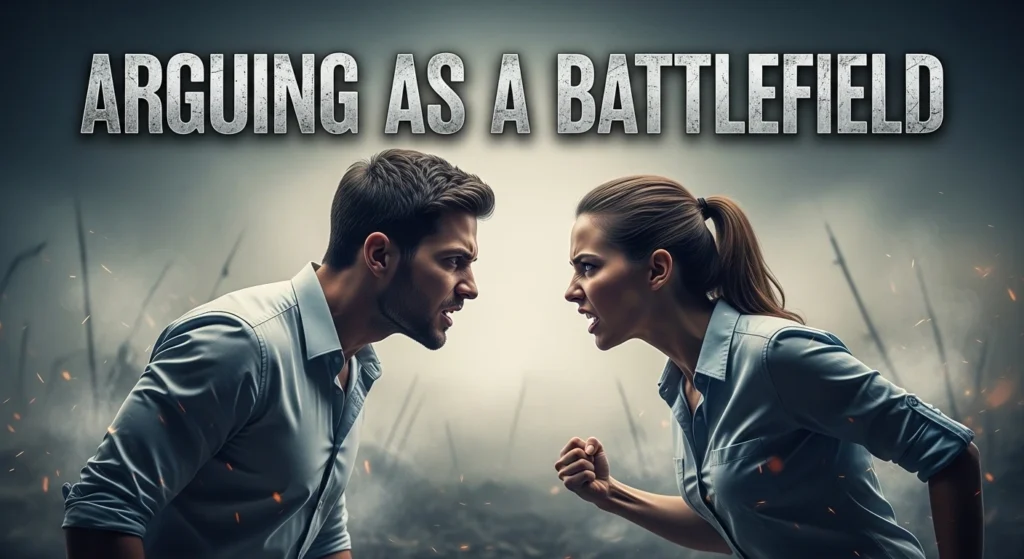
A battlefield metaphor highlights harshness and defense.
Meaning: Arguing becomes a fight where people try to win rather than understand.
Example idea: “Every discussion felt like a battlefield, filled with sharp words and shields.”
Alternative expressions:
- A war of opinions
- Combat with language
This metaphor emphasizes conflict and hurt.
Arguing as Tug-of-War
This metaphor shows struggle and resistance.
Meaning: Two people pull against each other, neither wanting to give in.
Example idea: “Their relationship became a tug-of-war, each argument pulling them further apart.”
Alternative expressions:
- A constant struggle
- Pulling in opposite directions
This metaphor feels exhausting and repetitive.
Arguing as Colliding Waves
Waves suggest emotion meeting emotion.
Meaning: Arguments can feel like two forces crashing together.
Example idea: “Their anger came in waves, colliding again and again.”
Alternative expressions:
- A surge of emotion
- A crashing tide
This metaphor works well for emotional arguments.
Arguing as Broken Glass
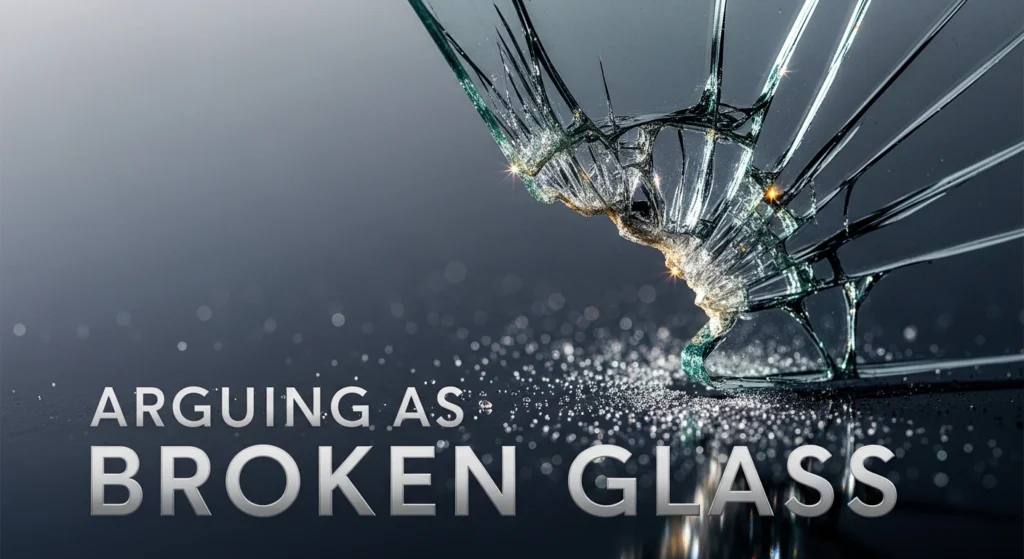
Broken glass metaphors show lasting damage.
Meaning: Words can shatter trust, leaving sharp fragments behind.
Example idea: “The argument left broken glass between them—nothing felt safe to touch afterward.”
Alternative expressions:
- Cracks in the bond
- Shattered understanding
This metaphor is powerful for painful conflict.
Arguing as Noise in a Small Room
This metaphor highlights suffocating tension.
Meaning: Arguments can feel louder and heavier when there is no emotional space.
Example idea: “Their words filled the room like noise with nowhere to escape.”
Alternative expressions:
- Echoes of anger
- Crowded silence
This metaphor captures claustrophobic conflict.
Arguing as a Chess Match
Not all arguments are loud. Some are strategic.
Meaning: People choose words carefully, trying to outsmart rather than connect.
Example idea: “Their argument was a chess match, each sentence a calculated move.”
Alternative expressions:
- A game of control
- Mental sparring
This metaphor suggests cold tension.
Arguing as a Volcano
A volcano represents bottled emotions erupting.
Meaning: Arguments can be explosions after long silence.
Example idea: “Years of unspoken feelings erupted like a volcano in one argument.”
Alternative expressions:
- An emotional eruption
- Lava of resentment
This metaphor shows buildup and release.
Arguing as a Knot Tightening
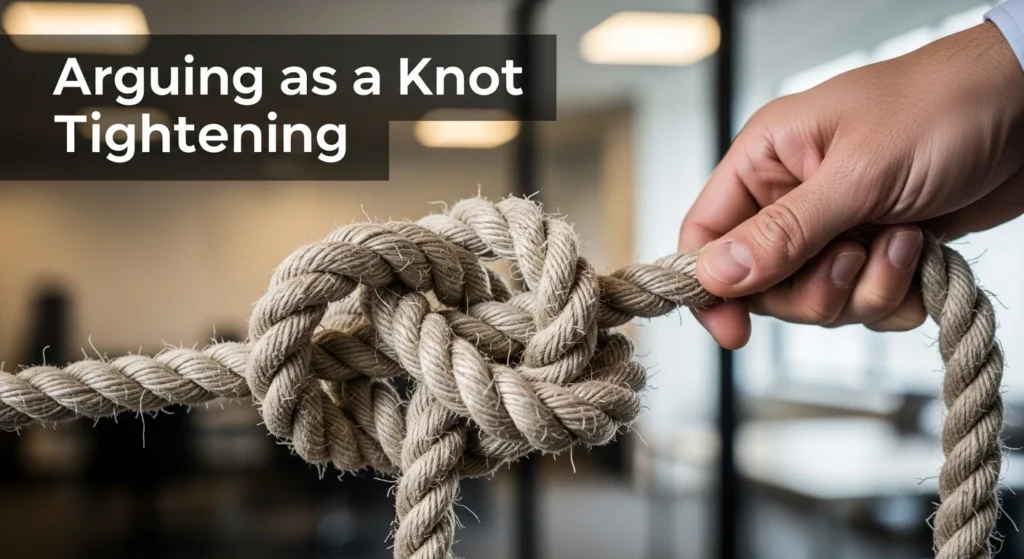
This metaphor shows unresolved tension.
Meaning: Each argument makes things more tangled.
Example idea: “The more they argued, the tighter the knot between them became.”
Alternative expressions:
- Tangled emotions
- A twisted connection
This metaphor feels quiet but heavy.
When Arguing Can Be Healthy
Not all arguments are destructive. Sometimes they are necessary storms that clear the air.
Metaphors for healthy conflict include:
- Cleaning out a wound
- Clearing fog
- Breaking silence
These images show arguing as a path to honesty.
When Arguing Becomes Harmful
When arguments repeat without understanding, metaphors become darker:
- Poison in the air
- Endless war
- Fire that burns everything
These metaphors reflect emotional damage and exhaustion.
How Writers Use Arguing Metaphors
In stories, arguing is rarely just dialogue. Writers show conflict through imagery: slammed doors like thunder, sharp words like knives, silence like smoke after fire.
Metaphors deepen the emotional atmosphere, helping readers feel the argument rather than simply hear it.
A Simple Activity to Create Your Own Argument Metaphor
Complete this sentence:
“Our argument felt like ______.”
Possible answers:
- A storm breaking suddenly
- A tug-of-war with no winner
- Fire spreading too fast
- Glass shattering between us
This helps you express conflict honestly and creatively.
Using These Metaphors in Daily Life
Metaphors can help you communicate emotions without blaming.
Instead of saying “You always fight,” you might say: “It feels like we get caught in storms.”
Instead of “This hurts,” you might say: “Our words leave cracks behind.”
These images invite understanding rather than escalation.
Keeping Argument Metaphors Clear and Real
Choose metaphors that fit the tone of the conflict. Not every disagreement is a war. Sometimes it is a knot, sometimes a wave, sometimes a spark.
A single strong metaphor is often enough to capture the feeling.
Conclusion
Arguments will always exist. They are part of being human. However, the way we frame them changes everything. When you see arguments as battles, you fight. When you see them as puzzles, you solve and when you see them as dances, you move together.
Metaphors are not just words. They are tools. They shape how we think, how we feel, and how we respond. Therefore, choose them wisely. Speak with intention. And watch how even the most heated arguments begin to soften, shift, and transform into something meaningful.
FAQs
Why are metaphors for arguing useful?
They help express the emotional experience of conflict more vividly than plain language.
Are arguing metaphors always negative?
Not always. Some metaphors show arguing as clearing the air or breaking silence in healthy ways.
What metaphor best describes intense arguments?
Storm, fire, volcano, and battlefield metaphors capture strong, explosive conflict.
What metaphor works for quiet tension in arguments?
Knots tightening, chess matches, and crowded-room metaphors reflect subtle conflict.
How can I create my own metaphor for an argument?
Think about how the argument feels—loud, sharp, exhausting, cold—and choose an image that matches that emotion.



