The fan hums softly above your head. A thin beam of sunlight slips through the curtain and stretches across the floor like a quiet visitor. You sit there, surrounded by stillness so deep you can almost hear your own thoughts breathing. The air feels heavy, yet strangely clear. No voices. No footsteps. Just you—and the echo of your own presence.
That feeling, that delicate mix of silence and awareness, often pushes us to search for words. Yet plain words fall short. So, we turn to metaphors.
What Being Alone Really Means
Being alone is not always loneliness. Solitude can be restful, even necessary. Loneliness, on the other hand, often carries pain—a sense of disconnection.
Aloneness can mean space to breathe, but it can also mean absence. The difference lies in whether the silence feels chosen or forced. Metaphors help capture that difference with emotional clarity.
Why Metaphors Help Describe Solitude
Aloneness is an internal experience. You cannot measure it, but you can feel it deeply. Metaphors give it shape.
Instead of saying “I feel lonely,” someone might say “I feel like an island.” That single image communicates separation, distance, and longing more vividly than the word lonely alone.
Metaphors also help us speak about solitude in softer ways, especially when direct words feel too exposed.
Being Alone as an Island
The island is one of the most common metaphors for solitude.
Meaning: An island suggests separation from others, surrounded by distance.
Example idea: “After the breakup, he felt like an island, cut off from the mainland of everyone else’s lives.”
Alternative expressions:
- Alone across the sea
- Stranded in quiet waters
This metaphor often carries sadness, but it can also suggest independence.
Being Alone as a Lighthouse
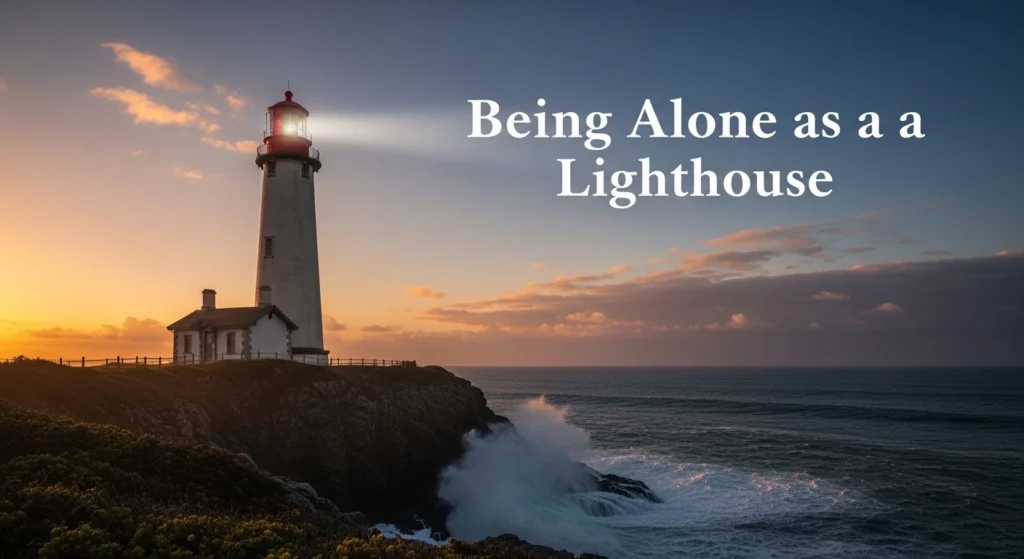
A lighthouse is alone, but it still shines.
Meaning: This metaphor suggests solitude with purpose—standing apart, yet offering guidance.
Example idea: “She was a lighthouse in her solitude, learning to glow even without company.”
Emotional detail: This image feels hopeful. It shows aloneness as strength, not only emptiness.
Alternative expressions:
- A solitary beacon
- A light on the edge of night
Being Alone as an Empty Room
An empty room metaphor focuses on absence.
Meaning: It represents quietness that feels hollow, where something is missing.
Example idea: “The house felt like an empty room inside his chest.”
Alternative expressions:
- A silent hallway
- A space without echoes
This metaphor is often used for grief, longing, or emotional emptiness.
Being Alone as Winter
Winter metaphors suggest coldness, stillness, and waiting.
Meaning: Aloneness becomes a season where warmth feels distant.
Example idea: “Her loneliness was winter—beautiful in its stillness, but aching in its cold.”
Alternative expressions:
- A frozen season
- Snow-covered silence
Winter metaphors can feel poetic, mixing beauty with sadness.
Being Alone as a Closed Door
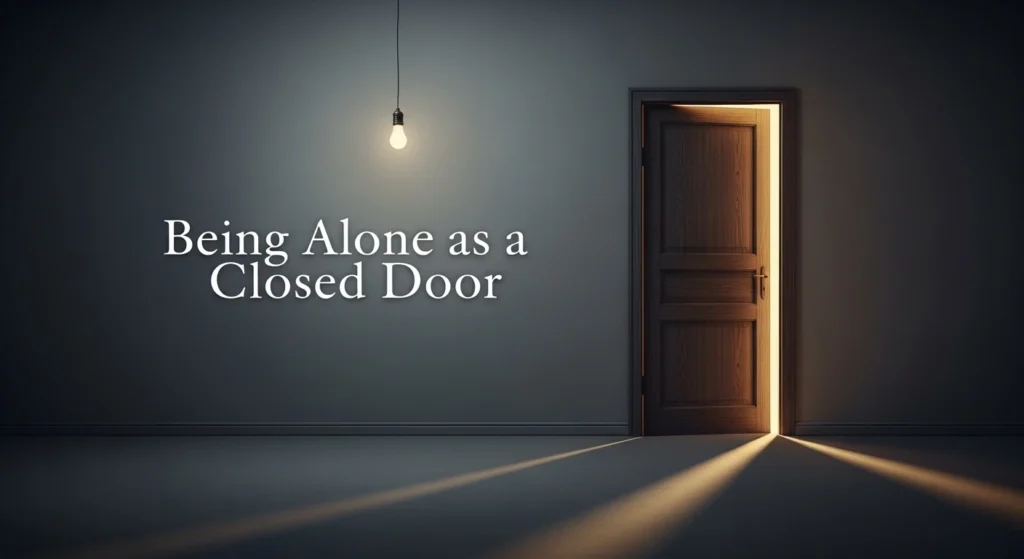
A closed door symbolizes separation and exclusion.
Meaning: It suggests being shut out, disconnected, or unable to reach others.
Example idea: “He felt like life had closed a door, leaving him standing outside in quiet.”
Alternative expressions:
- Locked away
- Behind a barrier
This metaphor often carries emotional isolation.
Being Alone as a Desert
The desert metaphor emphasizes emptiness and vast distance.
Meaning: It represents loneliness as something wide, dry, and endless.
Example idea: “Without friends nearby, her days felt like a desert stretching forever.”
Alternative expressions:
- A barren landscape
- Endless sand
This metaphor is strong for deep loneliness.
Being Alone as a Single Star
A star is alone in the sky, yet it still shines.
Meaning: This metaphor suggests solitude with beauty and quiet resilience.
Example idea: “He was a single star—small, distant, but still bright.”
Alternative expressions:
- A lone spark
- A quiet light in darkness
This image is gentle and uplifting.
Being Alone as Silence After Music

Sometimes aloneness feels like what comes after joy.
Meaning: It suggests emptiness that follows connection or celebration.
Example idea: “After everyone left, the silence felt like music stopping too suddenly.”
This metaphor captures the emotional drop after social moments.
Being Alone as Floating
Floating metaphors suggest drifting without anchors.
Meaning: Aloneness becomes a feeling of being untethered, disconnected.
Example idea: “He floated through the week, unattached to anyone’s world.”
Alternative expressions:
- Drifting
- Unmoored
This metaphor often carries numbness.
When Being Alone Feels Peaceful
Not all solitude is painful. Sometimes being alone is healing.
Metaphors for peaceful solitude include:
- A quiet garden
- A soft blanket of silence
- A private sanctuary
These images show aloneness as rest, not rejection.
When Being Alone Feels Heavy

When loneliness hurts, metaphors become darker:
- Drowning in silence
- Buried under emptiness
- Lost in fog
These images show isolation as something consuming.
How Writers Use Metaphors for Being Alone
In literature, solitude is often symbolic. Characters become wanderers, islands, winter travelers, or stars in empty skies.
Writers rarely say “He was lonely” and stop there. Instead, they show loneliness through atmosphere, setting, and metaphor, letting the reader feel the quiet.
A Gentle Activity to Create Your Own Metaphor
Complete this sentence:
“Being alone feels like ______.”
Possible answers:
- A room with no voices
- A star in a wide sky
- A winter morning
- A boat far from shore
This helps you express solitude in a personal way.
Using These Metaphors in Daily Life
Metaphors can help you share feelings without overexplaining.
Instead of “I’m lonely,” you might say:
- “I feel like an island lately.”
- “It’s been a bit of winter inside me.”
They offer emotional honesty with softness.
Keeping Solitude Metaphors Simple and True
Choose metaphors that match your feeling. Aloneness is not one thing. Sometimes it is peace. Sometimes it is pain. The best metaphor is the one that feels accurate, not dramatic.
A single clear image can say more than many words.
Conclusion
Metaphors for being alone allow you to see your feelings from a new angle. They transform silence into imagery and loneliness into something you can understand, express, and even share. When you say, “I feel like a lighthouse in the fog” or “a leaf falling in autumn,” you are not just describing isolation—you are giving it meaning.
Moreover, these metaphors remind you that solitude is not one-dimensional. It can feel heavy like an empty room, yet it can also feel peaceful like a quiet lake at dawn. By learning to express both sides, you gain emotional clarity and creative strength.
So, the next time you find yourself sitting in stillness, don’t rush to escape it. Instead, observe it. Describe it. Turn it into something vivid. Because sometimes, the most beautiful words are born in the quietest moments.
FAQs
What is the difference between being alone and loneliness?
Being alone is a physical state, while loneliness is the emotional feeling of disconnection.
Why are metaphors useful for describing solitude?
They help express complex emotions through vivid, relatable images.
Can metaphors for being alone be positive?
Yes. Images like a lighthouse or a quiet garden show solitude as peaceful and strong.
What metaphor works best for deep loneliness?
Desert, winter, and empty room metaphors often capture isolation and longing.
How can I create my own metaphor for being alone?
Think about how solitude feels to you—cold, calm, empty, or freeing—and choose an image that matches.



