The wind does not whisper anymore—it presses against the skin like a fever. The sky hangs heavy, thick with heat, while the ground below cracks open like dry lips begging for water.
You hear the distant hum of machines, the restless buzzing of cities that never sleep, and somewhere far away, ice melts without a sound. Climate change is not just a statistic or a headline; it feels like a slow, creeping shift in the rhythm of life itself. It smells like smoke after a forest fire, tastes like saltwater creeping into freshwater, and sounds like silence where birds once sang.
Climate Change Explained Through Living Images
Climate change is more than rising temperatures. It is a shift in Earth’s natural systems—oceans, forests, weather, and life patterns. Metaphors help us translate this vast process into something relatable.
Why Comparing Climate Change Helps People Understand
Many people struggle to connect with climate change because it feels distant. Metaphors create emotional closeness, helping us see the crisis not as an abstract concept, but as something happening now.
Climate Change as a Story of a Changing Planet
The planet is not static. Climate change is like a story unfolding, chapter by chapter, with consequences growing stronger each year. Metaphors help us narrate that story.
How Metaphors Turn Science Into Feeling
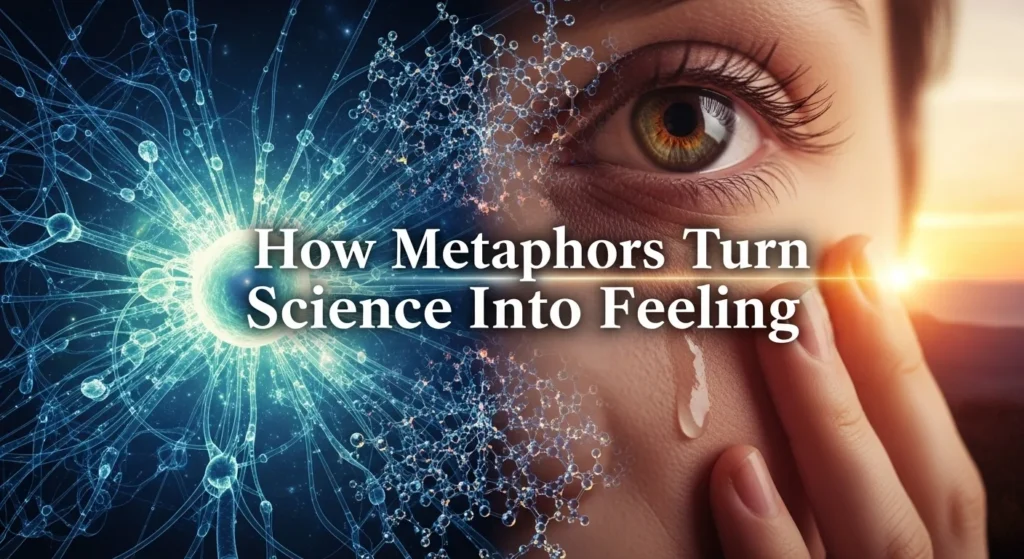
Science gives us data, but metaphors give us meaning. They allow us to feel climate change as illness, fire, imbalance, or loss, rather than just reading about it.
Climate Change as Earth’s Fever
Climate change is often compared to a fever because the planet is warming unnaturally, like a body fighting sickness.
A fever is never meaningless. It is a warning sign that something inside is out of balance. When Earth heats beyond its normal rhythms, it is as if the planet’s systems are straining under stress.
Heatwaves become symptoms. Melting ice becomes swelling. Rising seas become the body overflowing its limits.
Example Sentence
“The planet is running a fever, and every heatwave feels like a symptom.”
Other Ways to Express It
- “A sick Earth overheating”
- “The world burning with illness”
- “A rising temperature of distress”
Sensory Detail
A fever brings sweat, exhaustion, dizziness—just as extreme heat brings danger and discomfort.
How the Fever Metaphor Creates Urgency
When a person has a fever, we don’t ignore it. We treat it before it worsens. This metaphor reminds us that climate change is not normal warming—it is a sign of crisis.
Climate Change as a Slow Wildfire
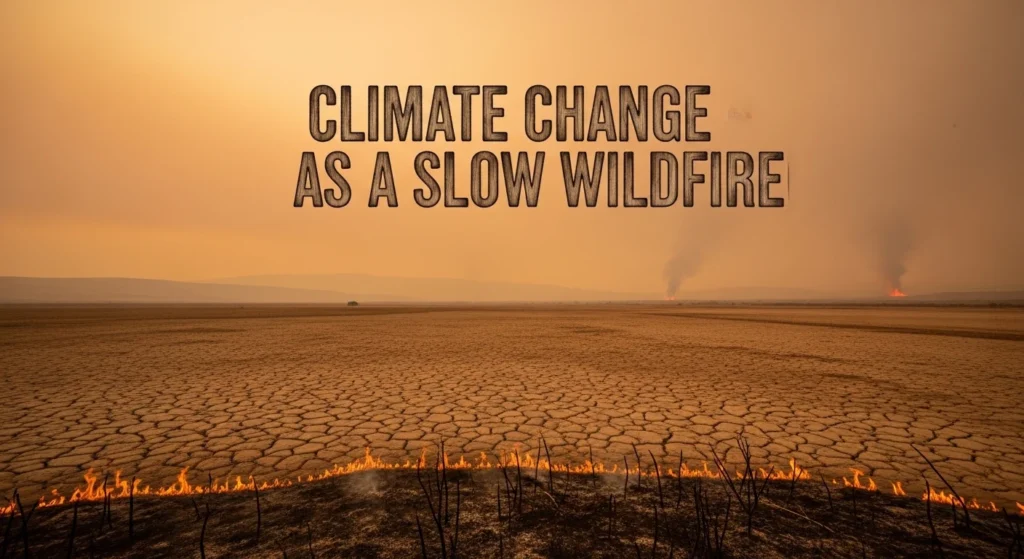
Climate change can be like wildfire: spreading quietly at first, then becoming unstoppable.
Wildfires begin with one spark. At first, smoke is faint, easy to dismiss. But soon flames rise, consuming forests, turning skies orange. Climate change has grown the same way—small industrial sparks over decades have built into a global blaze.
The danger is not sudden; it is creeping. That makes it even more frightening.
Example Sentence
“Climate change is a slow wildfire, creeping forward even when we pretend not to see the smoke.”
Other Ways to Express It
- “A creeping blaze”
- “A quiet inferno building strength”
- “Fire spreading through time”
Mini Story Touch
A forest doesn’t burn all at once. It burns leaf by leaf, tree by tree—until suddenly the whole landscape is changed. Climate change works the same way.
Why Fire Metaphors Feel So Immediate
Fire demands action. It cannot be negotiated with. This metaphor captures the danger of delay: waiting too long allows the flames to grow beyond control.
Climate Change as Falling Dominoes
Climate change is also like a line of dominoes: one system falls, and others follow.
Melting glaciers affect sea levels. Warmer oceans fuel stronger hurricanes. Drought ruins crops. Each change triggers another, creating a chain reaction.
Climate change is not one single event—it is interconnected collapse.
Example Sentence
“It’s like a line of dominoes—once the first one falls, the rest begin to topple.”
Other Ways to Express It
- “A chain reaction of imbalance”
- “Nature’s systems collapsing together”
- “A fragile order breaking apart”
Sensory Detail
You can almost hear the click-click-click of consequences unfolding.
The Image of a World Losing Balance
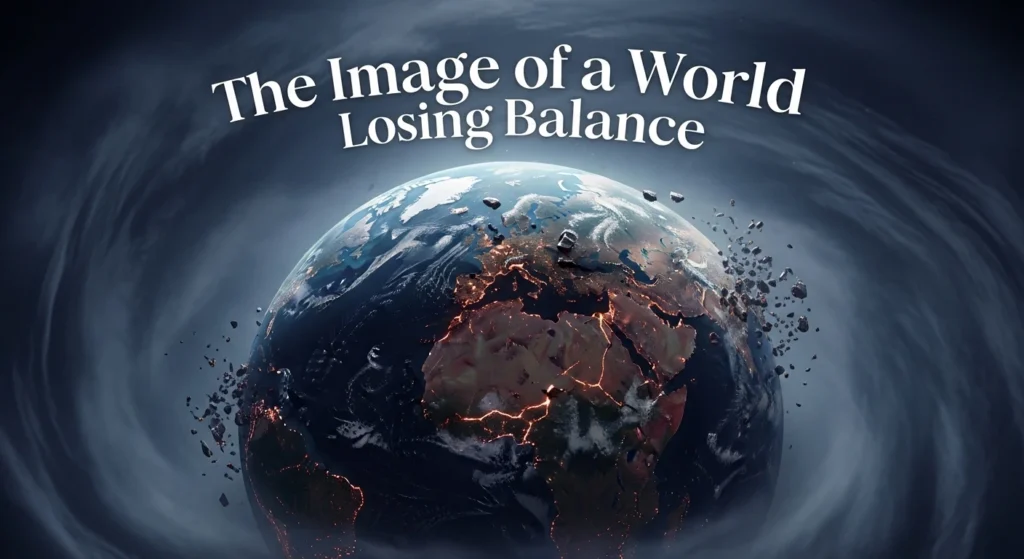
The Earth is a delicate scale. Climate change is the weight tipping it too far.
Metaphors include:
- “A wobbling tightrope”
- “A cracked equilibrium”
- “A scale thrown off”
Example Sentence “The planet’s balance is trembling like a rope in strong wind.”
Climate Change as a Pot Slowly Boiling Over
Some people describe climate change as a pot heating gradually.
At first, the warmth seems harmless. But the temperature keeps rising until the boil becomes dangerous.
Example Sentence “We are living in a pot that keeps heating, pretending the boil won’t come.”
This metaphor highlights the slow danger of ignoring change.
Climate Change as Nature’s Emergency Alarm
An alarm exists to wake us.
Climate change can be seen as:
- “Earth’s siren”
- “A warning bell”
- “A red flashing signal”
Example Sentence “Every storm is an alarm ringing louder.”
The planet is sending signals—we must listen.
Climate Change as a Quiet Thief of Seasons
Not all climate change is dramatic. Some of it is subtle, like a thief stealing slowly.
Winters become shorter. Springs arrive too early. Familiar weather disappears.
Example Sentence “Climate change is a thief, stealing seasons year by year.”
This metaphor carries grief and loss.
Climate Change as Grief for the Future
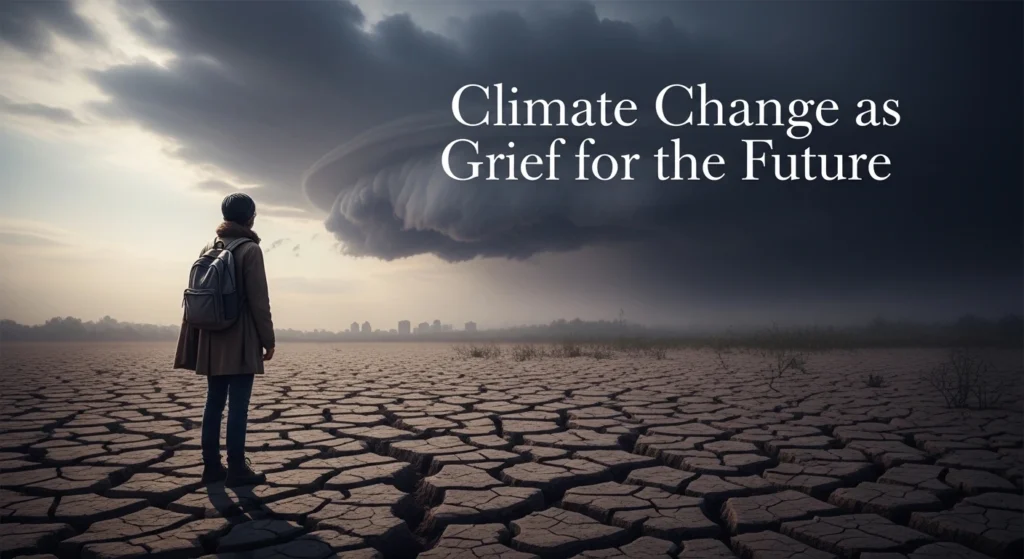
Climate change is also emotional. It creates a strange sadness: mourning a world that is still here, but changing.
Metaphors include:
- “A future thinning like ice”
- “The planet’s fading memory”
- “A slow mourning of nature”
Example Sentence “It feels like grieving tomorrow before it arrives.”
Your Turn to Create a Metaphor
Complete the sentence:
Climate change feels like ___ because ___.
Sample Answers:
- Climate change feels like a fever because Earth is overheating unnaturally.
- Climate change feels like wildfire because it spreads faster the longer we ignore it.
- Climate change feels like dominoes because one collapse triggers another.
- Climate change feels like an alarm because it warns us urgently.
- Climate change feels like a thief because it steals seasons quietly.
Using These Metaphors in Writing and Awareness
Metaphors can strengthen:
- Essays
- Speeches
- Poems
- Social media posts
- Climate conversations
Examples:
- “The Earth is burning with fever.”
- “We are standing in the smoke of tomorrow.”
- “The dominoes are already falling.”
Metaphors make climate change unforgettable.
Climate Change as a Character
Imagine climate change in a story.
Sample Answers:
- A silent thief stealing winter
- A growing fire monster
- A warning messenger
- A sick giant needing care
Example Sentence “Climate change is a silent thief, stealing snow one year at a time.”
Why These Metaphors Stay in the Mind
Climate change is vast, but metaphors bring it closer. They help us picture the crisis, feel its urgency, and speak about it in human ways. When people can imagine something clearly, they are more likely to care—and act.
Conclusion
Climate change is vast, complex, and sometimes overwhelming. Yet, metaphors give us a way to grasp it, feel it, and talk about it. They turn numbers into images and data into stories. Because of that, they help us connect, communicate, and care.
When you use metaphors thoughtfully, you do more than describe a problem—you invite others to see it through your eyes. You create understanding, spark emotion, and perhaps inspire action. And in a world that urgently needs awareness, those words can become powerful tools for change.
FAQs
1. Why are metaphors useful for climate change?
They make a complex issue easier to imagine and emotionally understand.
2. What is the most common metaphor for climate change?
Earth as a fever is one of the strongest and most widely used images.
3. How do metaphors create urgency?
They connect climate change to immediate dangers like fire, illness, and alarms.
4. Can metaphors help in climate awareness writing?
Yes, they make essays, speeches, and campaigns more vivid and memorable.
5. How can I create my own metaphor for climate change?
Think about what it feels like—heat, imbalance, warning—and compare it to something familiar.