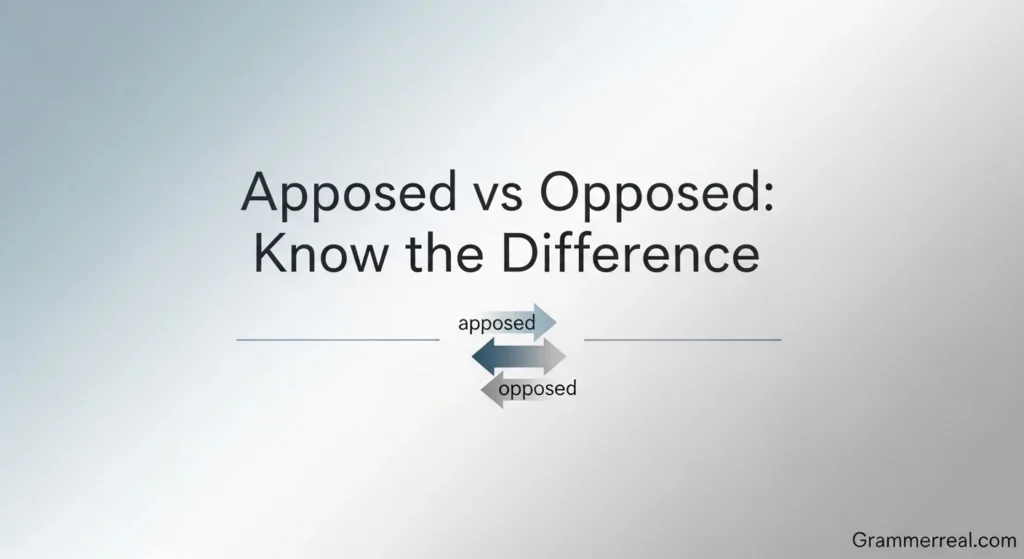
Many people mix up apposed vs opposed because these words look almost the same. However, they mean totally different things.
Therefore, using the wrong word can confuse your readers completely. Moreover, knowing the difference helps you write better and speak clearly. Additionally, you will feel more confident when you use the right word. In this article, we will explain apposed vs opposed in very simple words. Furthermore, you will see easy examples that make everything clear. Consequently, you will know exactly which word to use every time.
Main Difference Between Apposed and Opposed
The main difference is simple:
Apposed → means putting two things next to each other (doctors use this word)
Opposed → means you are against something or you disagree
Because these words mean different things, you need to think about what you want to say. Therefore, the situation tells you which word is right.
What Does “Apposed” Mean?
Apposed means placing two things side by side or next to each other. However, most people never use this word in daily talk. Additionally, doctors and nurses use apposed when they talk about body parts or medical stuff.
Simple meaning:
- Put next to something
- Place side by side
- Set close together
When people use it:
Doctors use apposed when they close wounds or talk about body parts touching each other. Therefore, you will see this word in medical books or hospitals. Moreover, normal conversations almost never include this word.
Examples of “Apposed” in Sentences
Context: medical work Correct: The doctor apposed the cut edges to help healing. Incorrect: The doctor opposed the cut edges to help healing.
Context: body parts Correct: The nurse apposed the two skin layers carefully. Incorrect: The nurse opposed the two skin layers carefully.
Context: technical talk Correct: The edges stay apposed during recovery. Incorrect: The edges stay opposed during recovery.
Here, apposed shows that things are placed next to each other. Therefore, the word fits medical or technical situations.
What Does “Opposed” Mean?
Opposed means you disagree with something or you are against it. Additionally, people use this word all the time in normal conversations. Moreover, opposed shows you don’t like an idea, plan, or decision.
Simple meaning:
- Against something
- Don’t agree with it
- Don’t want it to happen
When people use it:
Everyone uses opposed when they talk about opinions, choices, and feelings. Therefore, you hear this word every day on TV, in school, and in conversations. Additionally, opposed is much more common than apposed.
Examples of “Opposed” in Sentences
Context: disagreement Correct: She opposed the new rule right away. Incorrect: She apposed the new rule right away.
Context: being against something Correct: Many people opposed the price increase. Incorrect: Many people apposed the price increase.
Context: showing opinion Correct: He is opposed to eating junk food. Incorrect: He is apposed to eating junk food.
Here, opposed shows disagreement or being against something. Therefore, the word works when you talk about opinions and feelings.
Grammar Behind Apposed and Opposed
Apposed → verb (medical word for placing things together)
Opposed → verb or adjective (shows disagreement)
How to use them:
Apposed: Someone apposed something (medical context)
Opposed: Someone opposed something / Someone is opposed to something
Using the right pattern makes your sentence correct. Therefore, learning these simple rules helps a lot.
Common Mistakes and How to Avoid Them
Using apposed when you mean opposed
Incorrect: I am apposed to this plan. Correct: I am opposed to this plan.
Using opposed when you mean apposed
Incorrect: The doctor opposed the wound edges. Correct: The doctor apposed the wound edges.
Spelling mistakes
Incorrect: She was aposed to the idea. Correct: She was opposed to the idea.
Always think about what you want to say. Therefore, check if you are talking about disagreement or medical positioning. Moreover, reading your sentence again helps you catch mistakes.
Daily English Usage
Opposed in daily life
People use opposed every single day because everyone has opinions. Therefore, you hear this word on news channels, in schools, and in normal talk.
Common ways to use it:
- “I’m opposed to that”
- “They opposed the idea”
- “She is opposed to the change”
Example: Students opposed the homework increase.
Apposed in daily life
Normal people rarely say apposed in daily conversations. However, doctors, nurses, and medical students use it regularly. Therefore, unless you work in a hospital, you probably won’t need this word much.
Example: The surgeon apposed the tissue layers.
Using the correct word makes you sound smart and clear. Moreover, people will understand you better.
American vs British English
Both American and British people use these words the same way. Therefore, you don’t need to learn different rules for different countries. Additionally, the meanings stay exactly the same everywhere.
Simple Method to Choose Quickly
Are you talking about disagreement or being against something? → Use opposed
Are you talking about putting things next to each other (medical)? → Use apposed
Thinking about what you mean helps you pick the right word fast. Therefore, always check your sentence first. Additionally, most of the time you will need opposed, not apposed.
Easy Tips for Learners
First, figure out if you are talking about opinions or medical stuff. Then, pick the word that matches your meaning. Additionally, read lots of examples to get better. Furthermore, don’t just guess because the words sound similar. Moreover, practice writing sentences with both words. Consequently, you will get better and better with practice.
Memory trick:
Opposed sounds like opposite → both mean against something
Apposed has two P’s → think of two things Placed together
Grammar Rules Applied
Good writers use active voice because it sounds clearer. Therefore, we say “She opposed the rule” instead of “The rule was opposed by her.” Additionally, putting words in the right order helps people understand. Moreover, using transition words connects your ideas smoothly. Furthermore, simple words help everyone understand easily. Consequently, these rules make your writing better.
Writing Techniques Used
This article uses lots of transition words like therefore, moreover, additionally, and consequently. Furthermore, we mix short sentences with longer ones. Additionally, we use easy words that everyone knows. Moreover, we show clear examples of right and wrong usage. Consequently, these tricks make the article super easy to read.
Simple Summary
Here’s the simple version:
Opposed = against something, don’t agree, don’t like it
Apposed = placed next to something, medical word
What you are talking about tells you which word to use. Therefore, always think about your meaning first. Additionally, remember that opposed is way more common in everyday English.
Why Learning This Helps You
Understanding apposed vs opposed stops you from making silly mistakes. Additionally, your writing becomes much clearer. Moreover, you feel more confident in tests and homework. Furthermore, people understand exactly what you mean. Consequently, learning small differences like this makes you a much better writer. Therefore, taking time to learn these words really pays off.
Conclusion
In short, apposed vs opposed are totally different words. Opposed means being against something or disagreeing, while apposed means putting things side by side in medical situations. Therefore, thinking about what you want to say helps you choose correctly. Moreover, opposed is way more common than apposed in normal life. Additionally, with some practice, picking the right word becomes super easy. Consequently, you will write and speak more clearly in every situation.
FAQs
Is “opposed” right for showing I disagree?
Yes, opposed is perfect when you want to show disagreement or that you are against something.
Do people use “apposed” a lot?
No, apposed is mainly a medical word that doctors use, not something you hear every day.
Can I say “I am apposed to this idea”?
No, you should say “I am opposed to this idea” because you are showing disagreement.
Do “apposed” and “opposed” mean the same thing?
No, apposed means putting things next to each other, while opposed means being against something.
Which word will I use more?
You will use opposed much more because people talk about opinions and disagreements all the time.
Can “apposed” talk about opinions?
No, only opposed talks about opinions and disagreements.
Are the rules same in American English?
Yes, both American and British English use these words exactly the same way.
How can I remember the difference fast?
Think of opposed like opposite (both mean against), and apposed has two P’s for Placing things together.
Can “opposed” be a describing word?
Yes, you can say “I am opposed to lying” where opposed describes how you feel.
Do people use “apposed” in normal writing?
Almost never, because apposed is a technical medical word that regular people don’t use.