Language learners, students, and even fluent English users often pause when they see zeroes or zeros written on a page. Both forms look correct, both appear in books and articles, and both are used by educated writers.
This confusion is natural because English spelling sometimes allows more than one acceptable form. The keyword zeroes or zeros refers to two plural spellings of the word zero, and understanding when and why each is used can make writing clearer and more confident. In daily writing, exams, professional documents, and casual messages, this small spelling choice can raise big questions. Some people worry about being marked wrong, while others simply want to sound natural. The good news is that this topic is simpler than it looks. With clear rules, examples, and practice, you can master it easily. This article explains the meaning, usage, grammar rules, and differences behind zeroes or zeros in simple language. By the end, you will know which form to use, why it works, and how to avoid common mistakes.
What does the word “zero” mean?
Before discussing zeroes or zeros, it is important to understand the base word zero. The word zero refers to the number 0, which means nothing or no quantity. It is used in math, science, sports, money, and everyday speech. For example, we say “zero balance,” “zero degrees,” or “zero chances.” The word can function as a noun, an adjective, or even a verb in some contexts.
As a noun, zero names a number, an adjective, it describes a lack of something, such as “zero effort.” As a verb, it means to focus closely, as in “to zero in on a problem.”
Because zero is flexible, its plural form appears in many situations. That is where the question of zeroes or zeros begins.
Understanding plural forms in English
In English, most nouns form their plural by adding -s or -es. For example, book becomes books, and box becomes boxes. However, English also includes many exceptions, variations, and style-based choices.
Words ending in -o are especially tricky. Some take -s, others take -es, and some allow both forms. For example:
- photo → photos
- piano → pianos
- hero → heroes
- tomato → tomatoes
The word zero falls into this flexible group. That is why both zeroes or zeros exist.
Zeroes or zeros: which one is correct?
The short answer is that both zeroes and zeros are correct plural forms of the word zero. Neither is wrong, and both are accepted in standard English. However, usage depends on style, region, and context.
- Zeros is the more common and modern spelling.
- Zeroes is less common but still correct, especially in certain writing styles.
Most dictionaries list both forms, with zeros often appearing first because it is used more frequently.
Why do both forms exist?
The reason zeroes or zeros both exist comes from the history of English spelling. English borrowed the word zero from Italian and French. Over time, English writers applied different plural rules to words ending in -o.
Some writers followed the rule of adding -es, creating zeroes. Others preferred the simpler -s, creating zeros. As language evolved, usage settled into accepting both.
Today, style guides and dictionaries agree that both forms are correct, but they note that zeros is more widely used.
Zeros in modern English usage
In modern writing, zeros is the preferred form in most situations. It appears more often in books, newspapers, academic writing, and digital content. It looks cleaner and shorter, which many writers prefer.
Examples:
- The report contains several zeros at the end of the figures.
- He scored three zeros on the test.
- Remove the extra zeros from the number.
In math and science, zeros is almost always used. Teachers, textbooks, and exams favor this form because it aligns with standard plural rules.
Zeroes in traditional and formal contexts
Although less common, zeroes still appears in formal, traditional, or older writing. Some writers use it to match older plural patterns, especially when they want a more classical tone.
Examples:
- The manuscript contained many spelling errors and unnecessary zeroes.
- Leading zeroes were added to maintain formatting.
In computing and technical writing, zeroes sometimes appears when writers want to avoid confusion with the verb zeros (which can mean “focuses on”). However, this is rare.
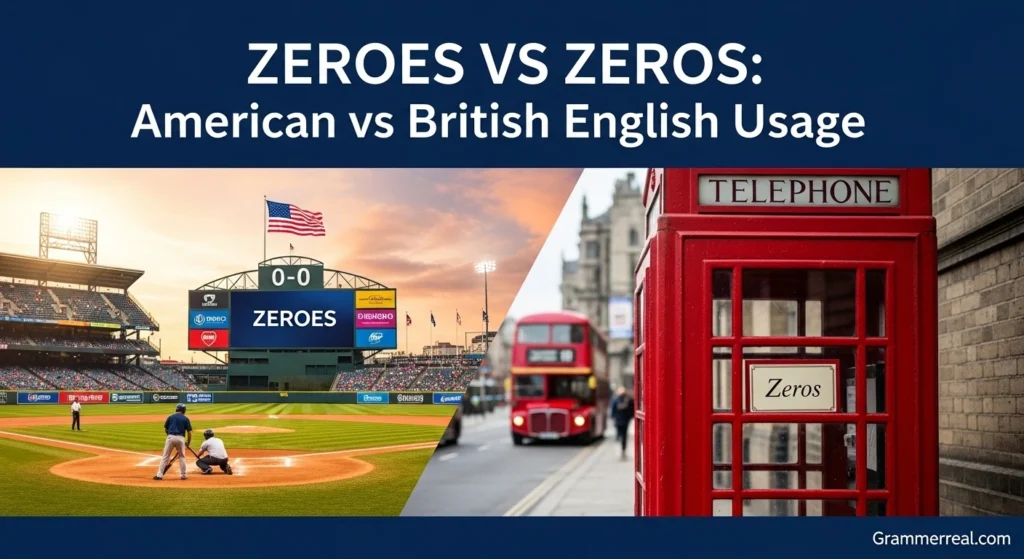
Zeroes or zeros in American English vs British English
Many learners wonder if zeroes or zeros depends on American or British English. The truth is that both forms are accepted in both varieties.
However, usage patterns differ slightly:
- American English strongly prefers zeros.
- British English also prefers zeros, but zeroes appears a bit more often than in American usage.
Even so, zeros is dominant worldwide. If you want a safe and widely accepted choice, zeros is the better option.
Grammatical role of zeroes or zeros
Understanding grammar helps you use zeroes or zeros correctly in sentences. As plural nouns, both forms follow the same rules.
Examples:
- These zeros are unnecessary.
- Those zeroes were added by mistake.
Notice that the verb agrees with the plural subject. You use are, not is. Correct subject-verb agreement is essential for clear writing.
Zero as a verb and possible confusion
One reason writers hesitate between zeroes or zeros is the verb form zeros. As a verb, zeros means “focuses closely.”
Example:
- She zeros in on small details.
In theory, this could cause confusion, but context usually makes the meaning clear. In practice, readers understand whether zeros refers to numbers or actions.
Common mistakes with zeroes or zeros
Even though both forms are correct, writers still make mistakes when using zeroes or zeros. Here are some common errors to avoid:
- Mixing forms in the same document
- Using the singular zero when a plural is needed
- Using zero’s instead of zeros or zeroes
- Changing spelling without reason
Example of a mistake:
- The number has three zero’s at the end.
Corrected version:
- The number has three zeros at the end.
The apostrophe is incorrect because this is a plural, not possession.
Zeroes or zeros in numbers and figures
When writing about numbers, zeros is the standard choice. This applies to money, measurements, statistics, and data.
Examples:
- Add two zeros to the amount.
- The value dropped by several zeros.
Using zeroes in this context is not wrong, but it looks less natural to modern readers.
Idiomatic expressions using zero
English includes many expressions that use the word zero. These expressions usually keep zero in singular form, but plurals appear in explanations.
Examples:
- Zero tolerance
- Zero gravity
- Zero hour
When explaining these expressions, you may refer to zeros as numbers, not ideas.
Style consistency and writer choice
One important writing principle is consistency. If you choose zeros, use it throughout your text. If you choose zeroes, do not switch halfway.
Most writers today choose zeros because it looks simpler and more familiar. Teachers and examiners also prefer it because it matches common usage.
Practical tips for choosing zeroes or zeros
Here are some simple tips to help you decide:
- Use zeros in general writing, exams, and professional work
- Use zeroes only if you have a clear reason or style preference
- Be consistent once you choose one form
- Avoid apostrophes in plurals
- Read your sentence aloud to check clarity
Following these tips will help you avoid confusion and write with confidence.
Examples in full sentences
Seeing zeroes or zeros in context makes understanding easier.
Examples with zeros:
- The account balance shows several zeros.
- Remove unnecessary zeros from the data.
Examples with zeroes:
- The editor deleted extra zeroes from the draft.
- Leading zeroes were added for alignment.
Both sets are correct. The difference is style, not meaning.
Why simple language improves clarity
Using simple language helps readers understand your message faster. In the case of zeroes or zeros, choosing the more common form reduces hesitation for readers. Clear grammar, correct verb tense, and proper sentence structure make writing smoother and more readable.
Short sentences explain rules. Longer sentences add detail. This balance keeps writing natural and engaging.
Reflection on grammar rules used
This topic applies several grammar rules:
- Plural noun formation
- Subject-verb agreement
- Consistent spelling choices
- Proper use of articles and prepositions
By focusing on these rules, writers improve accuracy and confidence. Careful review prevents small errors from distracting readers.
How this exercise improves writing skills
Learning about zeroes or zeros does more than solve a spelling problem. It teaches attention to detail, consistency, and reader awareness. These skills apply to all writing tasks, from essays to emails.
Writers who understand small choices write more clearly and sound more professional. Simple wording, correct grammar, and thoughtful structure always improve communication.
Conclusion
The question of zeroes or zeros may seem confusing at first, but it becomes simple with clear explanation. Both forms are correct, accepted, and understood in English. However, zeros is more common and widely preferred in modern writing. Understanding plural rules, style differences, and common mistakes helps writers make confident choices. Consistency matters more than the specific form you choose. By applying basic grammar rules and using clear language, you can avoid errors and improve readability. Mastering small details like this strengthens overall writing skills and builds confidence in English usage.
FAQs
1. Are zeroes and zeros both correct?
Yes, both are correct plural forms of zero.
2. Which form is more common today?
Zeros is more common in modern English.
3. Is zeroes wrong in exams?
No, but zeros is usually preferred.
4. Do American and British English differ here?
Both accept both forms, but zeros is more popular in both.
5. Can I use zeroes in formal writing?
Yes, if you stay consistent.
6. Is “zero’s” ever correct?
Only for possession, not for plurals.
7. Which form should students use?
Students should use zeros for safety and clarity.
8. Does meaning change between zeroes and zeros?
No, the meaning stays the same.
9. Why do some writers prefer zeroes?
It follows older plural patterns and personal style.
10. What is the safest choice overall?
Zeros is the safest and most widely accepted choice.